

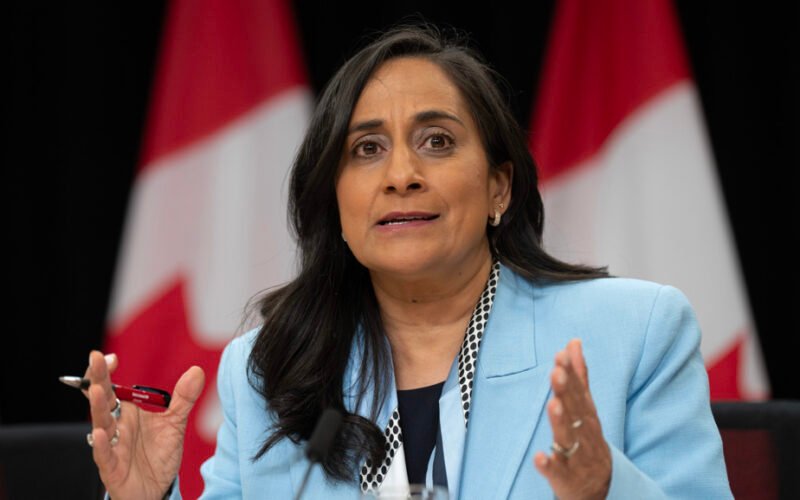
Ottawa (Rajeev Sharma): Following the outbreak of hostilities between the U.S. and Iran on February 28, 2026, the Canadian government has orchestrated a massive logistical effort to assist citizens and permanent residents in leaving the conflict zone. As of Friday, March 13, 2026, nearly 8,500 Canadians have successfully returned to Canada, while over 1,000 others have been relocated to safe third countries.
Foreign Affairs Minister Anita Anand has designated the “secure egress” of Canadians as her department’s top priority, though Global Affairs Canada (GAC) maintains there is no legal obligation to evacuate citizens—rather, it is a high-stakes service provided during global crises.
Logistics and International Cooperation
Canada’s strategy relies heavily on a “commercial first” approach, which is deemed the most cost-effective and efficient method for direct travel.
- Block-Booking: Ottawa often pays to hold seats on commercial airlines, which citizens then reserve and pay for themselves.
- Charter Services: When commercial routes are sold out or unsafe, the government charters buses or planes—recently illustrated by a chartered flight from Dubai to Istanbul.
- The Five Eyes & Allies: Canada participates in daily coordination calls with the Five Eyes intelligence alliance, France, Japan, and the EU to share resources. For example, Canadians might use French military assets while Australians might utilize Canadian-chartered flights.
- Military Status: While the Canadian military has assisted in past evacuations (Haiti and Sudan), Minister Anand confirmed that the military is not currently being used for evacuations in the Middle East.
Regional Challenges and Barriers
The evacuation effort faces several geopolitical and logistical hurdles:
- Kuwait Exit Permits: Foreigners in Kuwait, including Canadians, currently require employer-approved permits to leave. Minister Anand has engaged her Kuwaiti counterpart to expedite these clearances.
- Passport Delays: Airspace closures have delayed the delivery of physical passports to certain diplomatic posts, though the gradual resumption of air travel is expected to ease this backlog.
- “Sheltering in Place”: Despite high-profile drone strikes in Abu Dhabi and Doha, demand for evacuation is dropping. Only 3% of Canadians in Lebanon and 14% in the UAE have sought help, with many citing deep family ties or high-paying jobs as reasons to stay.
Cost and Sustainability
Evacuations operate on a partial cost-recovery basis. To remain fiscally prudent, Ottawa charges Canadians for seats on chartered transport at rates comparable to “normal” commercial prices found on sites like Expedia.
- Past Expenditures: For context, the 2024 Lebanon evacuation cost approximately $15 million, while the 2006 military-assisted mission cost $94 million.
- Budgetary Pressure: GAC is currently facing budget cuts and layoffs. To manage this, the department is “revamping emergency preparedness” and using new technology to coordinate across 12 different regional diplomatic posts.
Minister Anand remains confident that these efficiencies will allow Canada to continue responding to geopolitical crises despite the fiscal pressures.
