

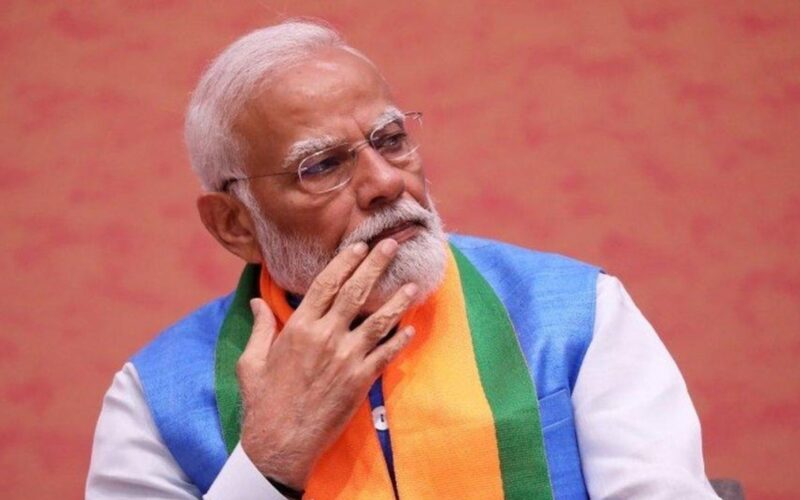
New Delhi (Gurpreet Singh): The Union government has stepped up efforts to manage cooking gas supplies after tensions in West Asia disrupted shipments passing through a crucial maritime corridor. Prime Minister Narendra Modi on Tuesday held a high-level meeting with Petroleum Minister Hardeep Singh Puri and External Affairs Minister S. Jaishankar to assess the situation and discuss contingency measures.
The review comes amid rising concerns over a potential shortage of liquefied petroleum gas (LPG) following escalating hostilities involving Iran, Israel and the United States. The conflict has affected maritime movement through the Strait of Hormuz, a vital shipping route for global energy supplies.
Officials said the government is working on a strategic response aimed at protecting domestic consumers from the fallout of the disruption. India relies heavily on imported LPG, with about 62 percent of the country’s demand met through overseas purchases. A major share of these imports—between 85 and 90 percent—usually passes through the Strait of Hormuz, making the current situation particularly sensitive for India’s energy security.
Authorities are now exploring alternative sources and routes for fuel imports to prevent prolonged supply gaps. At the same time, the government has begun regulating the distribution of available stocks to ensure that households do not face shortages.
India’s yearly LPG consumption is estimated at around 31.3 million tonnes. The domestic sector accounts for the largest share of usage, consuming nearly 87 percent of the total supply. Commercial establishments such as restaurants, hotels and small industries account for the remaining 13 percent.
With limited supplies available in the short term, the government has prioritised the domestic segment, ensuring that cooking gas cylinders for households remain available. This has resulted in tighter supplies for commercial users, many of whom depend on market-priced LPG cylinders for their operations.
Officials indicated that the Centre is monitoring developments in the region closely and will continue coordinating with international suppliers to secure additional shipments if required. The situation is being reviewed regularly as the government seeks to minimise the impact of the geopolitical crisis on the country’s energy needs.
