

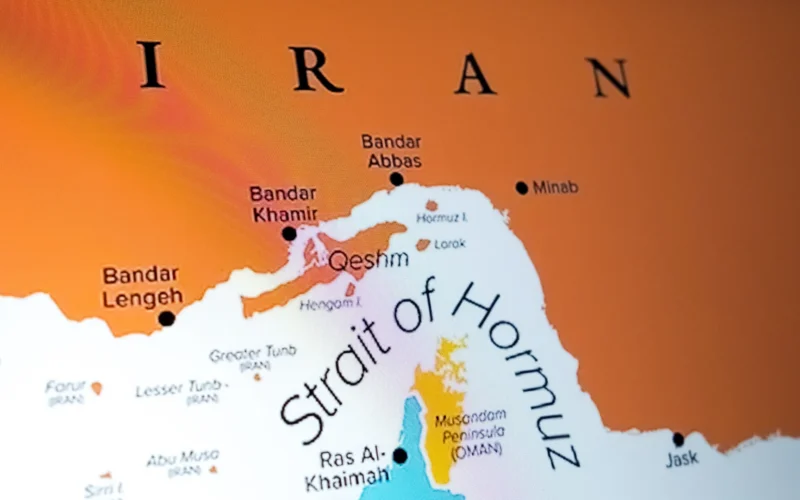
Tehran (Rajeev Sharma): India may avoid major disruption to its energy imports after Iran clarified that restrictions in the Strait of Hormuz apply only to ships associated with the United States, Israel, Europe and their allied nations. The announcement has brought cautious relief to New Delhi, which relies heavily on the key maritime route for crude oil shipments.
The strategic strait, located between Iran and Oman and measuring roughly 33 kilometres at its narrowest point, has remained closed since March 1 following coordinated military strikes on Iran by the United States and Israel. Given that close to 40 per cent of India’s crude imports travel through this channel, any prolonged shutdown had raised fears of supply interruptions.
Officials familiar with the situation said India’s energy position currently remains stable. Existing reserves are considered sufficient, and fresh supplies continue to arrive regularly. Authorities are also actively coordinating with international suppliers to ensure that the country’s fuel requirements remain unaffected.
Russia has signalled readiness to support India’s energy needs during the crisis. Russian Ambassador Denis Alipov noted that Moscow is prepared to expand crude exports to India if necessary. At present, India receives about one million barrels of Russian oil daily, and discussions are underway for additional volumes.
Meanwhile, the United States has proposed measures aimed at maintaining global energy transport through the region. President Donald Trump said the US Development Finance Corporation would provide insurance coverage to shipping companies operating in the Gulf at competitive rates. He added that the US Navy could step in to safeguard commercial vessels in the area if security conditions worsen.
India has also been exploring alternative supply arrangements. Countries including Australia and Canada have expressed willingness to export natural gas to India, while recent agreements with the United Arab Emirates and the United States have expanded the country’s options for energy imports.
Currently, India imports around 195 million metric standard cubic metres of natural gas each day. Qatar accounts for nearly 60 MMSCMD of that supply, though concerns emerged earlier this week when the Gulf nation temporarily halted production amid fears of potential attacks. As a result, India has begun identifying other markets for gas procurement.
Government officials said discussions are ongoing with major global energy producers and trading firms for crude oil and liquefied petroleum gas supplies. India is also coordinating with international bodies such as the International Energy Agency and the Organisation of the Petroleum Exporting Countries as it evaluates the evolving situation.
Adding to efforts to stabilise global energy markets, eight members of the OPEC+ alliance — Saudi Arabia, Russia, Iraq, the United Arab Emirates, Kuwait, Kazakhstan, Algeria and Oman — have announced plans to boost oil output beginning April 1. The additional production is expected to cushion the market against possible supply disruptions caused by tensions in the Gulf region.
Despite the uncertainty surrounding the geopolitical landscape, officials believe India’s diversified energy sourcing and steady stock levels will help the country navigate the ongoing crisis without major supply shocks.
