

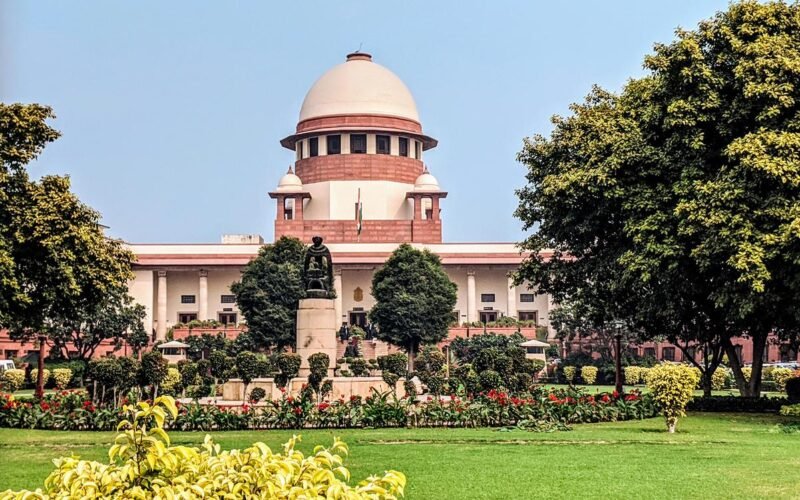
New Delhi (Gurpreet Singh): In a landmark pro-choice ruling on Friday, April 24, 2026, the Supreme Court of India held that no court can compel a woman, particularly a minor, to carry an unwanted pregnancy against her express will. A Bench comprising Justice BV Nagarathna and Justice Ujjal Bhuyan allowed a 15-year-old girl to medically terminate her pregnancy, which was over seven months along, emphasizing that reproductive autonomy is an integral facet of personal liberty and privacy under Article 21 of the Constitution. The Court directed that the procedure be conducted at AIIMS, New Delhi, prioritizing the mental, emotional, and physical well-being of the minor over the interests of the unborn child.
The Bench rejected the State’s suggestion, presented by Solicitor General Tushar Mehta, that the minor should carry the pregnancy to term and give the child up for adoption. The Court noted that forcing a minor to give birth against her wishes would inflict “grave trauma” and “irreversible consequences” on her life, especially since the girl had already attempted self-harm on two occasions. Justice Nagarathna highlighted that directing a woman to give birth to an unwanted child subordinates her welfare to that of the foetus, which is contrary to settled constitutional principles. The Court further warned that refusing legal termination often drives vulnerable women toward dangerous, illegal abortion centers.
While the Medical Termination of Pregnancy (MTP) Act generally sets a 24-week limit for such procedures, the Supreme Court exercised its constitutional powers to breach this statutory period. The Bench asserted that the “choice of the pregnant woman” must be the paramount consideration, particularly in cases involving minors or survivors of sexual assault. By permitting this late-term termination, the Court reaffirmed that reproductive choice is a fundamental right that cannot be rendered ineffective by unreasonable restrictions, ensuring that the minor’s educational prospects and social standing are protected from the long-lasting repercussions of a forced pregnancy.
