

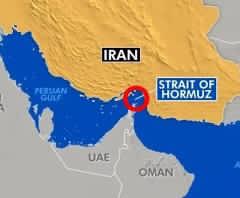
Vancouver ( Rajeev Sharma): The Iran has repeatedly warned that it could close the Strait of Hormuz in response to military or economic pressure, a move that would trigger one of the most severe energy crises in modern history. The strait, a narrow waterway only about 33 kilometres wide at its narrowest point, is the main transit route for oil and liquefied natural gas (LNG) exports from major producers such as Saudi Arabia, Iraq, the United Arab Emirates, Kuwait and Qatar.
According to international energy assessments, between 13 and 20 million barrels of oil per day (mbpd) nearly 20% of the world’s total petroleum consumption passes through the Strait of Hormuz. In addition, roughly one-fifth of global LNG trade, mainly from Qatar, also depends on this corridor. Any disruption, even temporary, would immediately tighten global energy supplies and push oil and gas prices sharply higher.
Asian economies would be the most exposed. Countries like China, India, and Japan import the majority of their crude oil from the Middle East and rely heavily on Hormuz for uninterrupted shipping. A blockade could force these nations to draw down strategic petroleum reserves, raise fuel subsidies, and face higher electricity and transport costs. Manufacturing, aviation, and shipping sectors would likely see immediate cost surges.
Global markets would also feel the shock. Energy price spikes would fuel inflation worldwide, raising food and transportation costs and slowing economic growth in Europe and North America. Financial markets could react with volatility, while shipping insurance premiums in the Gulf region would surge, further increasing the cost of trade. Militarily and politically, a closure of the strait would almost certainly provoke an international response. The waterway is considered vital to global energy security, and previous tensions in the region have led to naval patrols by the United States and allied countries to protect commercial shipping. Analysts warn that any sustained disruption could escalate into a broader regional conflict involving multiple powers.
Experts agree that the Strait of Hormuz is not just a regional chokepoint but a global economic lifeline. A blockade would not only strain oil and gas supplies but also reshape diplomatic relations, intensify geopolitical tensions, and test the resilience of the world’s energy system. Even the threat of closure is enough to unsettle markets an actual shutdown could trigger a worldwide energy and economic shock within days.
