

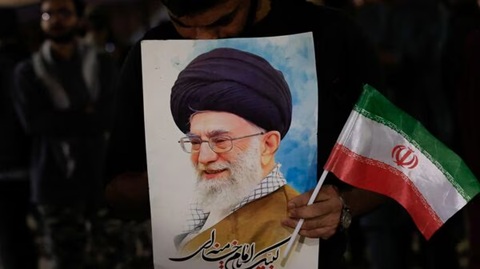
Tehran (Rajeev Sharma): With the death of Supreme Leader Ali Khamenei, Iran has entered a pivotal phase that will test the constitutional and political machinery of the Islamic Republic. The process to appoint his successor is defined by law, yet shaped heavily by internal clerical consensus and power dynamics.
Constitutional Path to Choosing a Leader
Under Iran’s system, the authority to select the next supreme leader rests with the Assembly of Experts, an 88-member council of Islamic jurists. Though elected by voters, all candidates must first receive approval from the powerful Guardian Council, which screens contenders for ideological and religious suitability.
The Assembly is obligated to appoint a new leader as soon as possible. While it technically holds the power to remove a sitting supreme leader, such an action has never occurred in the history of the Islamic Republic.
Temporary Leadership Framework
If deliberations extend beyond an immediate decision, Iran’s constitution allows for a provisional leadership council to assume responsibilities. This interim body would consist of the current president, the judiciary chief, and a senior cleric selected by the Expediency Council.
In the present scenario, figures such as President Masoud Pezeshkian and judiciary head Gholamhossein Mohseni Ejei could play a role in overseeing state affairs during the transition period.
Speculation Over Possible Successors
The question of who might succeed Khamenei remains highly sensitive. Much of the decision-making takes place behind closed doors, with little public insight into the Assembly’s discussions.
Previously, former president Ebrahim Raisi had been viewed as a potential heir apparent before his death in 2024. In his absence, attention has shifted to other clerical figures, including Mojtaba Khamenei, the late leader’s son. While he holds religious credentials, he has never occupied elected office — and any perception of dynastic succession could prove controversial within both reformist and conservative circles.
A Rare Transfer of Power
Iran has witnessed only one comparable transition since the 1979 Islamic Revolution. Following the death of Ruhollah Khomeini in 1989, Khamenei himself was elevated to the position of supreme leader. That change marked a defining moment for the republic, shaping its political trajectory for decades.
Today’s succession unfolds in a markedly different environment, with regional tensions, economic sanctions, and internal political divisions adding layers of complexity to the decision.
Why the Choice Matters
The supreme leader occupies the highest authority in Iran’s political system, holding final say over defense, foreign affairs, the judiciary, and major state policies. The office also commands oversight of the armed forces and the Islamic Revolutionary Guard Corps, making the role central to both domestic governance and Iran’s regional strategy.
As the Assembly of Experts convenes to determine the country’s next spiritual and political authority, the outcome will not only influence Iran’s internal stability but also its engagement with the wider world.
