

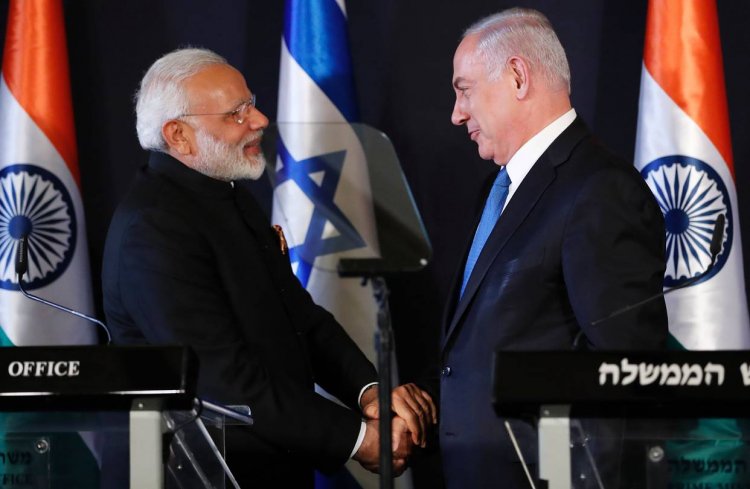
New Delhi (Rajeev Sharma): India and Israel have formally launched the first round of negotiations for a proposed Free Trade Agreement (FTA), coinciding with Prime Minister Narendra Modi’s two-day state visit to Israel starting February 25.
The inaugural round of discussions, being held in New Delhi from February 25 to 26, follows the signing of the ‘Terms of Reference’ in November 2025, which laid out the roadmap for structured negotiations aimed at strengthening bilateral trade and economic ties.
Trade Expansion in Focus
Merchandise trade between the two countries reached USD 3.62 billion in FY 2024–25. Officials said the proposed FTA is expected to provide greater predictability and stability for businesses, including micro, small and medium enterprises (MSMEs), while unlocking growth in sectors where the two economies are complementary.
Technical teams are currently negotiating key areas including trade in goods and services, rules of origin, sanitary and phytosanitary standards, technical barriers to trade, customs procedures and trade facilitation, as well as intellectual property rights.
Commerce Secretary Rajesh Agrawal described the timing of the negotiations as significant, aligning with the Prime Minister’s visit. He underlined potential cooperation in innovation, science and technology, artificial intelligence, cybersecurity, high-tech manufacturing, agriculture and services, stating that the FTA would help both nations maximise opportunities in these sectors.
Strategic Talks in Israel
During his visit, Modi is scheduled to hold delegation-level talks with Israeli Prime Minister Benjamin Netanyahu to review progress under the India–Israel Strategic Partnership and explore enhanced collaboration in defence, security, innovation, water management and emerging technologies. He will also meet Israeli President Isaac Herzog.
Government sources indicated that defence cooperation will feature prominently in the discussions, including joint development and co-production of advanced missile defence systems, drones and other critical technologies.
Strategic Autonomy Amid Regional Tensions
The visit takes place amid ongoing tensions in West Asia, alongside diplomatic efforts involving Iran and Western powers to prevent further escalation. Officials said India’s outreach reflects its approach of strategic autonomy — deepening engagement with Israel and the United States while maintaining balanced ties with other regional stakeholders.
The parallel launch of FTA negotiations and the high-level visit is being viewed as a move to add economic momentum to a partnership that has steadily expanded across defence, technology and innovation domains.
