

Washington/Tehran (Rajeev Sharma): Tensions between the United States and Iran intensified on Tuesday after American forces destroyed five Iranian oil tankers, while Tehran launched a fresh missile attack toward US-linked positions in Jordan, marking another sharp escalation in the more than six-month-old conflict.
The latest exchange of strikes has renewed concerns that repeated military confrontations could push the two countries further away from a negotiated settlement and deepen the economic fallout from the war.
Jordan Intercepts Iranian Missiles
Iranian state media reported that Tehran fired missiles toward American targets in Jordan following the US strikes on Iranian tankers.
Jordan’s armed forces said their air-defence systems intercepted 18 ballistic missiles headed toward the kingdom. Two additional missiles came down in unpopulated areas, according to the military.
No casualties were reported.
Jordan has remained a key US ally in the region and hosts American military personnel and facilities. Its territory and bases have consequently faced repeated threats during the conflict. The US Central Command did not immediately provide details regarding the reported missile attack.
Five Tankers Destroyed by US Forces
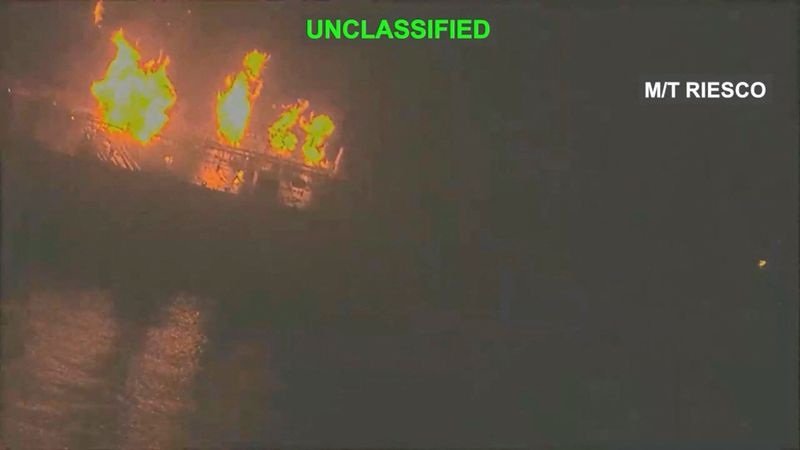
US Central Command said the latest strikes against Iranian oil vessels came after Iran’s Revolutionary Guards attempted to attack an American Navy warship with ballistic missiles on two occasions over the previous two days.
According to the US military, the American vessel avoided both attacks and continued its patrol without any US personnel being injured.
Five Iranian-linked tankers were subsequently targeted. The vessels identified by Central Command were Kivik, Charminar, Horizon 1, Riesco and Derya. Four of the ships were reported to be in the Gulf of Oman, while Derya was located near Kharg Island in the Strait of Hormuz.
US forces said crews aboard the vessels had been warned and instructed to leave before the strikes were carried out.
Iranian state television separately reported attacks on oil tankers near the southern port of Jask and around Kharg Island. Reports from the broadcaster said the crews were evacuated.
Tehran Warns Shipping Industry
The Iranian Revolutionary Guard Navy also issued a warning to crews aboard oil tankers near ports in Kuwait and Bahrain, urging them to leave their vessels immediately.
Iran accused the two Gulf states of allowing US forces to operate from their territory and assisting Washington’s military campaign. It warned that ships could face retaliation following the destruction of Iranian tankers.
The warnings add another layer of uncertainty for commercial shipping in the region, particularly around the Strait of Hormuz.
Strait of Hormuz Becomes Central Flashpoint
Control over the strategic waterway has emerged as one of the most contentious issues in the conflict. Before the war, roughly one-fifth of the world’s oil supply passed through the Strait of Hormuz, making any disruption there a major concern for global energy markets.
Iran has indicated that it could establish a new “exclusion zone” around the strait and wants commercial vessels to follow a route designated by Tehran.
Meanwhile, a US blockade of Iranian ports has placed additional pressure on Iran’s economy by restricting its ability to export crude. American forces have also been assisting a limited number of ships using a route through the strait near Oman.
Washington Combines Military Action With Sanctions
The latest military strikes came alongside another round of US economic measures targeting Iran.
The Trump administration announced sanctions against additional sections of Iran’s aviation sector, including more than two dozen commercial and private airlines as well as foreign cargo-service companies. The move is aimed at further restricting Tehran’s access to international trade networks.
US Secretary of State Marco Rubio defended the military response, saying Washington would not allow attacks on American naval forces to go unanswered.
Earlier on Saturday, US forces had also destroyed three Iranian oil tankers after the Revolutionary Guards allegedly attempted to strike a US aircraft carrier and destroyer with ballistic missiles.
Oil Prices Rise as Conflict Deepens
The growing confrontation is already being felt in global energy markets. Brent crude briefly surged to $99.46 a barrel on Tuesday, adding to concerns over fuel costs and inflation.
Higher energy prices could also create political difficulties for the Trump administration ahead of the November midterm elections, particularly if disruptions around the Strait of Hormuz persist.
Iran specialist Danny Citrinowicz of Israel’s Institute for National Security Studies cautioned that military pressure alone was unlikely to resolve the dispute over the waterway.
The continuing cycle of attack and retaliation, he warned, could instead draw Washington and Tehran into a broader confrontation while placing additional strain on the global economy.
