

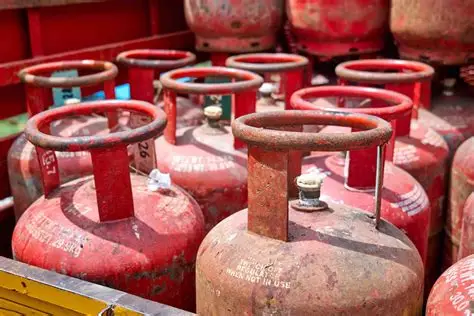
New Delhi (Gurpreet Singh): The Ministry of Petroleum and Natural Gas has announced a major policy relaxation for industrial and commercial Liquefied Petroleum Gas (LPG) consumers, effectively rolling back the stringent energy rationing measures imposed at the height of the recent West Asia crisis. Citing a substantial recovery in domestic production and a stable stream of upcoming imported LPG cargoes, the central government has lifted all sectoral restrictions on non-domestic packed LPG. This directive restores distribution channels to their full capacity, offering immense logistical relief to manufacturing units, hospitality chains, and small-to-medium business enterprises nationwide.
The policy shift addresses the critical shortage of bulk LPG, which had been completely suspended when global supply chains fractured at the onset of the geopolitical conflict. Under the new guidelines, bulk LPG supplies have been reinstated to 50 per cent of their pre-crisis consumption baselines. During the crisis, the government had invoked emergency powers under the Essential Commodities Act, mandates that forced oil marketing companies (OMCs) to divert all C3 (propane) and C4 (butane) chemical streams exclusively into the domestic cooking gas pool, completely starving the petrochemical and downstream manufacturing sectors. The ministry has now ordered a gradual reduction in this diversion, allowing key chemical streams to flow back into industrial manufacturing.
To prevent any structural threat to national energy security, the enhanced allocation of chemical streams to non-LPG sectors carries rigid regulatory conditions. The government has decreed that the domestic kitchen gas supply must remain entirely insulated from these changes, enforcing a strict legal floor ensuring that aggregate indigenous LPG production never drops below 40 Thousand Metric Tonnes (TMT) per day. The Centre for High Technology (CHT), operating under the petroleum ministry, has been officially tasked with overseeing organization-wise allocations for the petrochemical sector and submitting mandatory compliance audits directly to union authorities.
While OMCs have been directed to build a unified, cross-company database to track and manage commercial consumption patterns efficiently, the state’s long-term environmental framework remains unchanged. The ministry clarified that industrial consumers who transitioned to Piped Natural Gas (PNG) during the crisis will remain permanently on the grid. In a formal communication sent to the Chief Secretaries of all states and union territories, the Petroleum Secretary urged local administrations to collaborate closely with city gas distribution networks to progressively shift remaining eligible commercial units away from cylinders and onto permanent PNG lines, ensuring a balanced approach to clean energy transition.
