

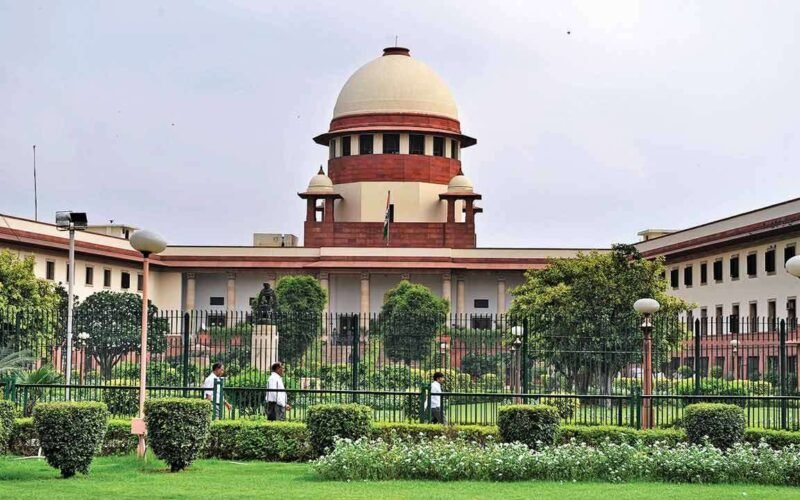
New Delhi (Gurpreet Singh): The Supreme Court of India on Thursday issued notices to the Union Government, state administrations, and Union Territories regarding a Public Interest Litigation seeking a uniform, nationwide framework to investigate child kidnapping and abduction cases. A three-judge bench led by Chief Justice of India Surya Kant, alongside Justices Joymalya Bagchi and V. Mohana, took cognizance of the plea demanding strict, time-bound inquiries, specialized operational protocols, and designated courts to guarantee expeditious trials in offenses concerning missing and abducted children.
The petition, filed by advocate Ashwini Kumar Upadhyay through advocate-on-record Ashwani Kumar Dubey, highlighted pervasive systemic shortcomings in how law enforcement agencies handle investigations involving vulnerable minors. Upadhyay urged the apex court to establish mandatory procedural standards across jurisdictions, emphasizing that delays in registering complaints and conducting searches significantly escalate the risk of trafficking, illegal adoption rackets, child labor, and sexual exploitation. The plea sought specific directives to ensure investigations are led by experienced officers not below the rank of Assistant Commissioner of Police or Station House Officer, alongside the creation of specialized fast-track courts—modeled after existing courts handling cases against lawmakers—to conclude kidnapping trials within a strict one-year timeframe. In addition to the state governments, notices were directed to the Law Commission of India as well as the Union Ministries of Home Affairs, Law and Justice, and Education.
During the same session, the top court also agreed to examine an interconnected public plea seeking comprehensive safeguards for underage users accessing online spaces and social media networks. Issuing notices to the Centre on a petition submitted by the non-governmental organization Just Rights for Children Alliance, the bench observed that institutional protections are urgently needed in India to shield young users from exploitation in virtual environments.
Representing the organization, senior advocate H.S. Phoolka argued that Indian jurisprudence firmly establishes that minors lack the legal capacity to enter into binding contracts, an inherent protection that must not be bypassed simply because user agreements and terms of service are executed over digital interfaces. The petitioner requested judicial orders instructing the Union Government to mandate that online platforms suspend agreements entered into with individuals under eighteen years of age, treating them as void from the outset. Counsel clarified that the plea does not advocate shutting children out of digital tools, acknowledging that the internet remains vital for modern education and skill development, but rather insists on robust structural checks to ensure online platforms operate with child safety as an uncompromised priority.
