

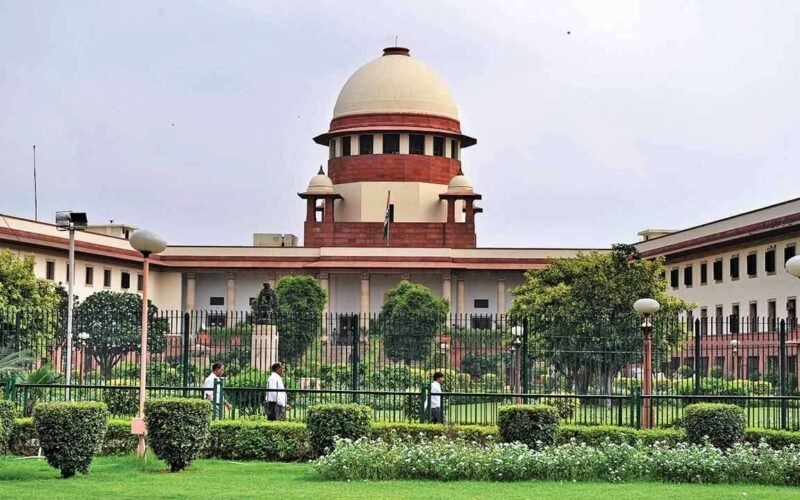
New Delhi (Gurpreet Singh): The Supreme Court on Tuesday issued an interim directive to all states, strictly prohibiting any coercive action against students who participated in the Cockroach Janta Party-led protests regarding the alleged NEET-UG 2026 paper leak. These demonstrations, which centered on demands for the resignation of Union Education Minister Dharmendra Pradhan, have reignited a significant legal discussion regarding the finality of First Information Reports. While the court’s order provides necessary temporary relief for the protesters, it does not function as a cancellation of the existing criminal records.
Under the Bharatiya Nagarik Suraksha Sanhita, an FIR serves as the formal mechanism to initiate a police investigation. Once a case is officially registered, it transitions from a private grievance into a matter involving the state, meaning the police do not possess the unilateral authority to simply erase or revoke a case once it has been filed. The legal process mandates that the investigating agency must complete its inquiry and present its findings to the court, regardless of whether the original complainant or the government expresses a desire to drop the matter.
Despite this rigid structure, Indian law outlines several established pathways for concluding criminal proceedings. State governments may issue formal notifications to close specific categories of cases, which effectively halts further police investigation. Alternatively, if an investigating officer concludes that there is insufficient evidence or that no cognizable offence occurred, they may file a closure report for the Magistrate to review. While the court retains the power to accept or reject these reports, it also holds the inherent authority to quash an FIR entirely if it determines that the continuation of proceedings constitutes an abuse of the legal process.
For many minor offences, the law also permits compounding, where parties can settle the dispute amicably with judicial approval. However, this option is generally unavailable for serious charges such as rioting or violence against public servants, which are common in protest-related cases. Consequently, for the students involved in the recent demonstrations, their legal standing will remain subject to the results of ongoing investigations and the discretion of the courts. The Supreme Court’s current intervention serves as a vital safeguard, ensuring that the legal process does not result in immediate punitive measures while these cases remain under active judicial consideration.
