

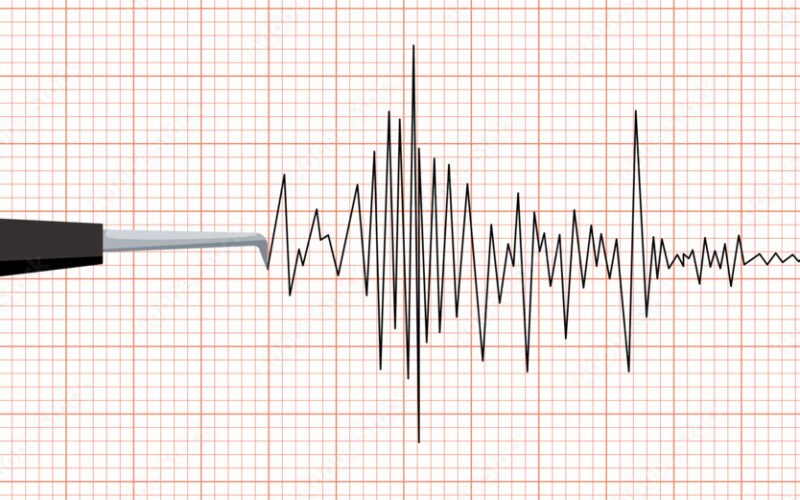
Chandigarh (Gurpreet Singh): Strong earthquake tremors rattled Chandigarh and the tricity region on Friday night, triggering widespread panic as residents — particularly those in high-rise apartments and multi-storey housing societies — abandoned their homes and spilled onto streets and open grounds. The deep-focus seismic event radiated energy across vast distances, shaking multiple states across North India but leaving no immediate reports of casualties or major structural damage in the local area.
The quake, recorded at around 9:46 pm IST, measured 5.9 on the Richter scale. According to the National Centre for Seismology (NCS), the epicentre was located in the Hindu Kush region near the Afghanistan-Tajikistan border, specifically at 71.01 degrees East and 36.52 degrees North. The NCS placed the focal depth of the hypocentre at 75 km, a considerable depth that seismologists noted was responsible for the wide propagation of tremors across the subcontinent while preventing catastrophic destruction at the surface epicentre.
Perceptible shaking lasting several seconds was felt across a sprawling geographic layout, including Chandigarh, Mohali, Panchkula, Noida, Ludhiana, Poonch, Srinagar, Udhampur, and Dehradun. Residents of high-rise towers in Chandigarh’s sectors and adjoining areas of Mohali reported light fixtures swaying, household objects rattling, and ceiling fans shaking visibly. The sudden movement prompted thousands of anxious citizens to bypass elevators and rush down stairwells into open public areas.
Emergency services across the tricity region were immediately placed on high alert following the incident. Local authorities continue to monitor structural integrity across critical infrastructure but confirmed that no injuries or property collapses had been reported by midnight. Disaster management officials have issued public advisories urging residents to remain calm, avoid using lifts, and immediately move to designated open spaces in the event of subsequent aftershocks.
The unique geological characteristics of the Hindu Kush range explain why these distant disruptions consistently impact the plains of North India. The mountain range sits astride one of the world’s most seismically restless zones, driven by the ongoing tectonic collision where the Indian Plate subducts beneath the Eurasian Plate. This intense convergence generates frequent deep-focus earthquakes along complex regional fault networks, including the Herat Fault, Chaman Fault, Main Pamir Thrust, and the Paghman Fault west of Kabul. Friday night’s event marks the second occasion this year that tremors originating from this specific Afghan tectonic zone have breached the 1,000 km distance to disrupt daily life across northern Indian states.
