

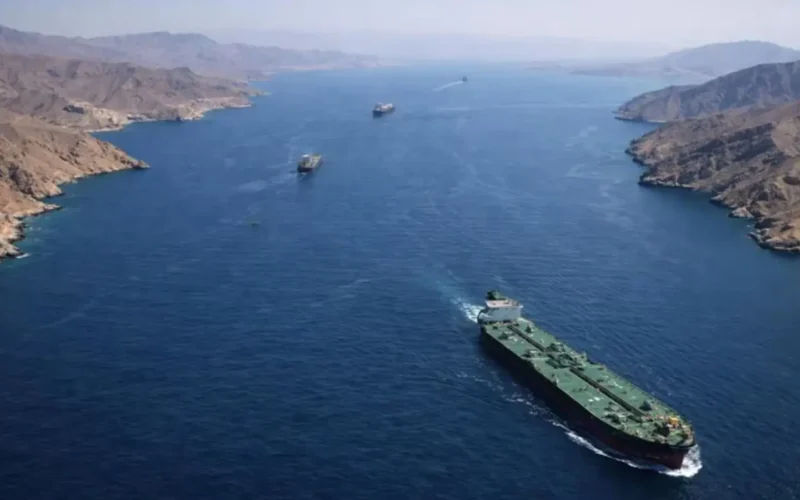
Washington (Rajeev Sharma): US President Donald Trump has again suggested that the United States could declare the Strait of Hormuz an American territory, bringing the strategically crucial waterway back into the spotlight as the conflict involving Iran continues.
Trump made the remarks while speaking to reporters at the White House on Monday. Referring to the current US presence and control around the strait, he said he viewed the proposal favourably and argued that Washington already exercised substantial control over the route.
The comments came as diplomatic efforts to halt the prolonged conflict face difficulties. Negotiations over a possible ceasefire have remained unresolved, while a memorandum of understanding between the United States and Iran reached its stated expiration point on Monday.
The Strait of Hormuz has remained central to the wider crisis because of its importance to global energy supplies. A substantial portion of the world’s oil shipments passes through the waterway, making any threat to its free movement a concern for energy markets and international trade.
Trump had also discussed the proposal during a speech in Long Island on Friday, when he suggested that the strait could become US territory. His latest remarks indicate that the idea remains under consideration in his public statements despite the absence of any announced formal process to change the status of the waterway.
Iran has strongly rejected the proposal. Deputy Foreign Minister Kazem Gharibabadi criticised the suggestion, maintaining that the strategic waterway cannot be taken over through presidential statements, military force or political declarations.
Trump has previously made remarks about possible changes to US territorial boundaries, including his repeated references to Canada becoming a US state and his interest in acquiring Greenland. None of those proposals has resulted in an actual alteration of US territory.
The latest comments are likely to add another contentious issue to an already strained relationship between Washington and Tehran, with the future security and accessibility of the Strait of Hormuz remaining closely linked to the broader regional conflict.
