

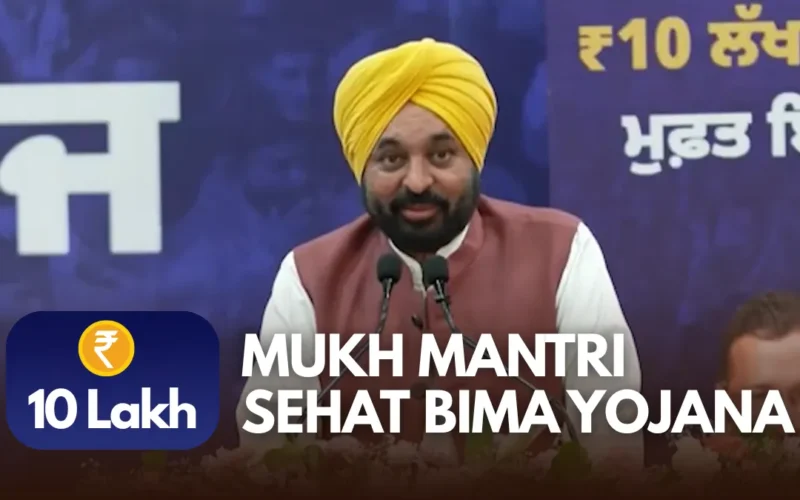
Gurpreet Singh :- Punjab’s healthcare landscape is witnessing a significant transformation, with lakhs of patients across cities and small towns now accessing treatment without bearing any financial burden. Under the state government’s flagship health initiative, patients who would earlier delay or avoid medical care due to high costs are now returning home after receiving treatment without paying hospital bills running into lakhs.
The scheme, introduced under the leadership of Chief Minister Bhagwant Singh Mann, aims to ensure accessible, affordable and dignified healthcare for every household. In a short span of three months, more than 4 million health cards have been issued, each offering an annual coverage of up to Rs 10 lakh per family. The scale of enrolment reflects both the demand for such a programme and growing public confidence in the system. On April 21 alone, 28,766 registrations were recorded, indicating rapid expansion and acceptance.
The impact of the scheme is visible across districts. Ludhiana leads with over 4.20 lakh cards, followed by Patiala with 3.82 lakh and Jalandhar with 2.85 lakh. Importantly, the benefits are not confined to major urban centres. Districts such as Hoshiarpur, Amritsar, Mansa, Fazilka and Barnala have also seen a steady rise in utilisation, highlighting the scheme’s penetration into smaller towns and semi-urban regions where access to affordable healthcare was previously limited.
Medical professionals on the ground report a marked shift in patient behaviour. Dr Maninder Singh Bhasin, Senior Medical Officer at Sub-Divisional Hospital, Khanna, said healthcare should not be a privilege. “Earlier, coverage was limited, but now every resident is included. In recent months, we have performed over 200 gallbladder surgeries, which typically cost between Rs 40,000 and Rs 80,000, without any out-of-pocket expense for patients,” he said. He added that knee and hip replacement surgeries, often costing over Rs 1 lakh, are now being conducted routinely under the scheme, with around 10 cashless procedures performed daily.
Highlighting emergency care, Dr Bhasin noted that in cases of ST-elevation myocardial infarction (STEMI), timely intervention is critical. “With the use of Tenecteplase, a clot-dissolving drug, we have been able to restore blood flow quickly and have saved around 100 lives so far,” he said.
Orthopaedic surgeon Dr Karan Chopra from Barnala echoed similar observations, stating that patients who once postponed surgeries for months are now seeking timely treatment. “Each surgery is saving patients between Rs 1 lakh and Rs 1.5 lakh, which is a major financial relief,” he said.
Punjab Health Minister Dr Balbir Singh emphasised that healthcare should not depend on a patient’s paying capacity. He reiterated that the scheme provides coverage of up to Rs 10 lakh per family annually, with the objective of delivering quality treatment without imposing economic stress on households.
Officials said the initiative is not only expanding healthcare infrastructure but also redefining the relationship between citizens and the system. By removing financial barriers, the government is ensuring that medical decisions are driven by need rather than cost. Doctors across the state observe a psychological shift as well, with families no longer waiting for conditions to worsen and instead opting for early medical intervention.
The scheme is increasingly being seen as a major reform in public healthcare delivery, restoring dignity to patients and reinforcing the idea that access to healthcare is a right, not a privilege.
