

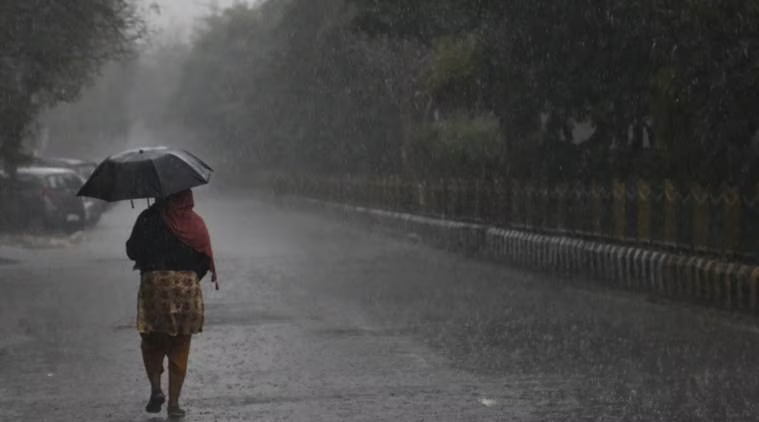
Chandigarh (Gurpreet Singh): Punjab is likely to see a shift in weather conditions over the next few days, with monsoon activity expected to strengthen after a relatively dry spell. The Meteorological Department has issued a yellow alert for parts of Hoshiarpur, Pathankot and Rupnagar, particularly areas close to the Himachal Pradesh border.
Chandigarh is likely to remain under partly cloudy skies, although one or two spells of rain or thundershowers cannot be ruled out.
The forecast comes after Sunday passed largely without significant rainfall across the state. The break in showers pushed temperatures upward, with the average maximum temperature increasing by 3.2°C. Sri Anandpur Sahib recorded the highest temperature in Punjab at 36°C.
The uneven distribution of rainfall remains a concern, with 17 districts receiving little rain, leaving several parts of the state facing dry conditions despite the ongoing monsoon season.
Weather systems moving towards north India
Meteorological Centre Chandigarh Director Surendra Pal said the weather pattern is being influenced by multiple systems.
A low-pressure area that developed over Gangetic West Bengal has moved across Jharkhand and is heading towards Chhattisgarh. Another low-pressure system has developed north of Jaipur. The trough connecting these systems has also shifted from the Delhi region towards Rajasthan.
These developments are expected to influence weather over Punjab, Haryana, Delhi and the Himalayan states, potentially bringing more rain to the region.
Rainfall activity strong along western coast
Meanwhile, heavy rain is expected across parts of India’s western coast, extending from Goa to Kerala. A strong Somali jet stream is contributing to the weather activity there.
The wider atmospheric pattern could also affect rainfall distribution across northern India. While Punjab and neighbouring states may receive increased rainfall, parts of Bihar and Uttar Pradesh could experience a relative decline in rain activity.
Hotter weather pushes up power consumption
The dry conditions have also had a direct impact on Punjab’s electricity demand.
Power consumption in the state climbed to 13,243 MW on Sunday night. Punjab’s own generation stood at 4,934 MW, while 8,307 MW was sourced through the grid.
The scheduled grid drawal was 7,987 MW, but demand required an additional 320 MW to be sourced. Grid frequency was recorded at 50.05 Hz during the period.
With the monsoon expected to become more active, residents in the three alert districts can expect a higher chance of showers, while the coming weather pattern could also provide some relief from the recent rise in heat and humidity.
