

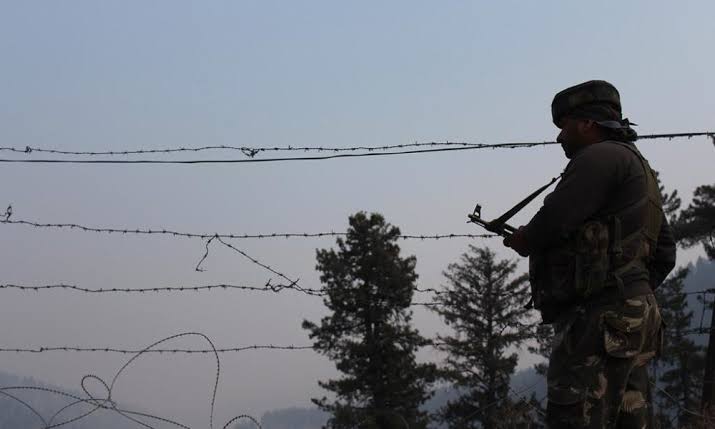
Chandigarh (Gurpreet Singh): Facing an increasing number of cross-border drone intrusions carrying narcotics and weapons, the Punjab Police have significantly strengthened surveillance along the international border by deploying advanced anti-drone systems, popularly referred to as “Hawai Nakas”. The new security framework is designed to detect, track and neutralise drones attempting to enter Indian territory from Pakistan.
Director General of Police (DGP) Gaurav Yadav said the anti-drone network has been developed as an additional layer of protection to complement the Border Security Force (BSF), which remains responsible for guarding the international border. The initiative has been implemented through close coordination with the BSF, the Indian Army and intelligence agencies.
According to official figures, security agencies recovered 474 drones and seized 777.474 kilograms of heroin along the Punjab border between 2025 and July 27, 2026. In 2025, authorities recovered 313 drones along with 385.119 kg of heroin. During the first seven months of 2026, another 161 drones were intercepted, while heroin seizures increased to 392.355 kg, indicating that traffickers are attempting to transport larger consignments through aerial routes.
Punjab shares a 553-kilometre international border with Pakistan, covering the districts of Pathankot, Gurdaspur-Batala, Amritsar Rural, Tarn Taran, Ferozepur and Fazilka. Officials said drug trafficking networks have increasingly shifted to drone-based deliveries, allowing consignments to be dropped across the border and quickly collected by local operatives.
To tackle the evolving threat, the state has installed three high-tech anti-drone systems at a cost of nearly ₹53 crore. Two systems have been deployed in Tarn Taran, while the third has been installed in Amritsar Rural. Together, they provide surveillance coverage across nearly 210 kilometres of the border in the most vulnerable sectors identified through intelligence assessments.
Ground security has also been enhanced through a network of 64 strategic naka points across Punjab’s border districts. At present, 28 checkpoints are operational and staffed by 317 personnel, including Punjab Police officers and Home Guards. Of these, 19 nakas function jointly with the BSF, ensuring seamless coordination during border operations.
Technology has become a key pillar of the state’s security strategy. A surveillance network of 2,336 CCTV cameras, installed at a cost of approximately ₹49.58 crore, now monitors border areas. Within the naka grid, 87 cameras have been positioned at 25 sensitive locations to strengthen real-time monitoring.
Officials acknowledged that drone technology used by smugglers continues to evolve rapidly, prompting security agencies to regularly upgrade their capabilities. Following a review of the existing infrastructure, four outdated checkpoints in Amritsar Rural were removed and three new technology-enabled nakas were introduced. As a result, 65 of the state’s 68 permanent checkpoints have now been modernised.
Looking ahead, the Punjab government has sanctioned ₹47.97 crore for the 2026–27 financial year to further strengthen border security. The allocation will be used to procure unmanned aerial vehicles (UAVs), bomb disposal equipment, bulletproof jackets and other specialised security gear, enhancing the preparedness of forces deployed along the border.
Officials believe that the combination of advanced anti-drone technology, expanded surveillance infrastructure and coordinated operations between state and central security agencies will significantly improve efforts to curb cross-border smuggling and strengthen Punjab’s border security architecture.
