

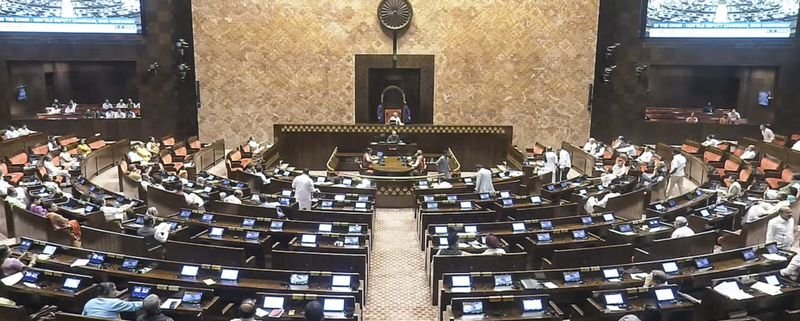
New Delhi (Gurpreet Singh): Parliament officially granted approval on Thursday to the Public Examination (Prevention of Unfair Means) Amendment Bill, 2026, introducing severe criminal and financial penalties to combat systemic malpractice in public examinations. The legislation was passed in the Rajya Sabha via a voice vote, following its approval in the Lok Sabha a day earlier, despite a walkout by Opposition members.
The newly enacted law aims to serve as a strong deterrent against the paper leaks that have frequently disrupted academic calendars and impacted student futures. Under the provisions of the amendment, individuals found guilty of leaking question papers or engaging in fraudulent examination practices face a mandatory prison term of five to 10 years, alongside fines reaching up to ₹50 lakh. For cases involving organized crime—such as large-scale syndicates or coordinated rigging—the law mandates a minimum sentence of seven years, extending up to life imprisonment, with financial penalties escalating to as much as ₹10 crore.
A central feature of the amendment is the decentralization of judicial processes to ensure timely justice. State governments and Union Territory administrations are now empowered to designate specific Sessions Courts as “special fast-track courts” to adjudicate offences under this Act. These courts are required to conduct proceedings on a day-to-day basis, with a strict mandate to complete trials within three months from the date the charge sheet is filed. Furthermore, the legislation grants the Central Government the authority to constitute a Special Task Force (STF) for the investigation of any offence when deemed necessary.
During the legislative proceedings, government representatives emphasized that protecting the sanctity of the examination system is a national priority. Addressing concerns raised during the debate, the government stated that it is actively taking decisive steps to resolve the structural issues affecting students across the country and urged cooperation from all political sections to ensure the law’s effective implementation. By shifting from general penal codes to this rigorous, specialized legal framework, the state aims to dismantle the criminal networks behind recurring paper leaks and restore trust in the competitive examination process.
