

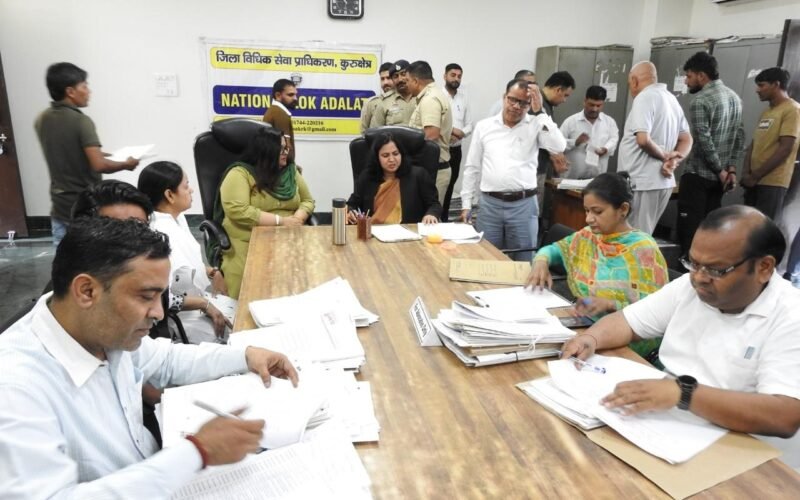
Chandigarh (Balwinder Singh): On May 9, 2026, a massive National Lok Adalat was successfully organized across all 22 districts and 38 sub-divisions of Haryana, marking a significant step toward strengthening accessible and speedy justice. Under the leadership and guidance of Justice Deepak Sibal, Executive Chairman of the Haryana State Legal Services Authority (HALSA) and judge of the Punjab and Haryana High Court, a total of 182 benches were constituted to resolve a vast array of legal disputes. The initiative resulted in the settlement of 425,746 cases, which included both pre-litigation and pending matters, effectively reducing the burden on the state’s judicial system. A total settlement amount of approximately 108.98 crore rupees was distributed or settled throughout the proceedings.
A particularly moving resolution occurred in the Panchkula Family Court, where a maintenance dispute between elderly parents and their sons was settled through mutual understanding. The senior citizens had filed a petition for maintenance under Section 144 of the BNSS Act, but during the peaceful atmosphere of the Lok Adalat, both parties engaged in a constructive dialogue. One son agreed to provide 11,000 rupees monthly, covering medical expenses, while the other son committed to paying 9,000 rupees per month from the date the petition was filed. Following this agreement, the parents withdrew their case, demonstrating how the Lok Adalat serves not only as a legal forum but as a bridge to restore familial harmony and emotional dignity.
The forum also successfully addressed an institutional conflict between the district judiciary and the local Bar Association in Faridabad. Through mediation and talk, the tension that had recently developed was resolved cordially as the advocates expressed regret over past incidents and the court withdrew its previous remarks. This restoration of a positive relationship between the bench and the bar was highlighted as a key achievement of the day. Justice Sibal monitored the proceedings across the state via video conferencing, ensuring that the benches maintained a litigant-friendly and efficient approach to maximize resolutions through consensus.
The 182 benches handled diverse legal issues including civil disputes, matrimonial cases, motor accident claims, bank recoveries, and check bounce cases under the Negotiable Instruments Act. Traffic challans, compoundable criminal cases, and matters pending before consumer commissions and debt recovery tribunals were also processed. The widespread participation and positive feedback from the public reflect a growing trust in alternative dispute resolution as a cost-effective and time-saving method. This successful exercise has significantly contributed to clearing the backlog of cases in Haryana’s courts while reinforcing the community’s faith in the justice delivery system.
