

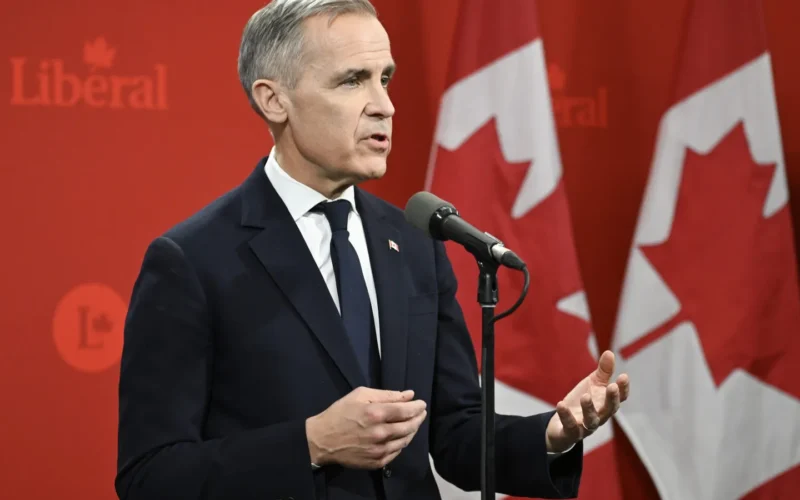
Ontario (Rajeev Sharma): Canadian Prime Minister Mark Carney has announced a major funding commitment of $4 billion for the country’s cultural sector, describing it as the largest investment of its kind in Canadian history. The announcement was made in Montréal, where Carney outlined measures included in Budget 2026 to support artists, strengthen cultural institutions and increase public access to Canadian heritage.
The investment is aimed at reinforcing Canada’s cultural identity and ensuring that homegrown stories, creative works and artistic talent receive greater recognition both domestically and internationally. The funding will cover museums, public broadcasting, journalism, festivals, publishing, performing arts and other cultural initiatives.
Museums, broadcasters and local journalism to receive support
Under the proposed budget measures, nearly $800 million will be provided over five years, beginning in 2026-27, to national museums, the National Battlefields Commission, the National Arts Centre and Library and Archives Canada. The funding will help modernise aging infrastructure, safeguard collections and maintain cultural programmes and services.
CBC/Radio-Canada is set to receive an additional $300 million over two years starting in 2026-27 to strengthen its ability to serve audiences across the country.
Local journalism will also benefit from more than $130 million over four years from 2027-28, along with over $40 million in ongoing annual funding for the Local Journalism Initiative. The government has also proposed extending the 35 per cent Canadian Journalism Labour Tax Credit to eligible private audio and audiovisual news organisations.
More opportunities for Canadians to access culture
The government plans to renew the Canada Strong Pass for summer 2027 with an allocation of more than $75 million. The programme is expected to provide free or discounted entry to national parks and museums, as well as reduced rail fares. It will also expand discounted access to Indigenous-led museums and cultural centres.
National museums are proposed to become permanently free throughout the year for visitors under 25, backed by more than $45 million over five years and over $10 million in ongoing funding.
Other initiatives include $60 million over four years for the National Gallery of Canada to improve access to its collections and programmes, both online and in person. A separate investment of more than $30 million will support the creation of a free national digital collection of Canadian books. The collection is expected to begin with at least 200 titles in 2027-28 and grow to more than 2,000 by 2031-32.
The Canada Book Fund will receive $20 million over four years, followed by $5 million annually, to help publishers distribute Canadian books and expand opportunities within the publishing industry.
Funding for national celebrations and international events
Budget 2026 also sets aside $300 million in 2027-28 for a Canada 160 Fund. The initiative will support major public celebrations, new Heritage Minutes and improvements to the Trans Canada Trail as Canada approaches its 160th anniversary.
Nearly $400 million over three years, beginning in 2027-28, is proposed to strengthen Canada’s role in the Francophonie and organise the 2028 Francophonie Summit in the National Capital Region.
Local cultural events will receive additional assistance through $10 million for the Building Communities through Arts and Heritage programme and $15 million for the Canada Arts Presentation Fund in 2027-28.
New tax relief and funding for artists
The proposed Canada Creative Credit is another key element of the package. The non-refundable personal income tax credit could provide relief on up to $45,000 in annual qualifying net business income earned from original creative artistic works.
The proposed Productivity Mega Deduction would allow businesses to immediately write off eligible equipment and technology. This could benefit production companies and creative professionals investing in cameras, lighting, sound systems, editing equipment and stage infrastructure.
Additionally, the Canada Council for the Arts is set to receive $20 million over three years from 2027-28 to support the creation and presentation of theatre, dance, music and other live performances.
Carney said the investment would strengthen the institutions that preserve Canada’s heritage while giving artists greater opportunities to share their work. Marc Miller, Minister of Canadian Identity and Culture and Minister responsible for Official Languages, said the funding would help Canadian voices gain greater visibility at home and internationally.
Industry Minister Mélanie Joly also highlighted the economic contribution of the cultural sector, saying the measures would support artists, producers, broadcasters, entrepreneurs and skilled workers while creating opportunities for Canadian creative industries to grow.
