

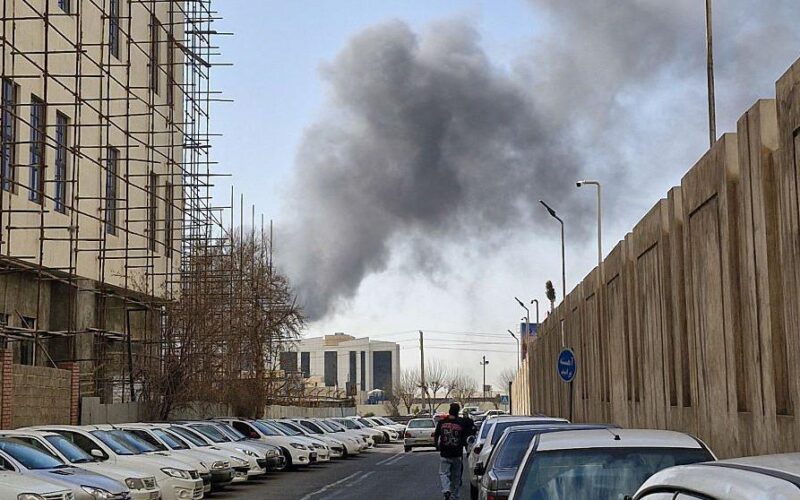
Washington (Rajeev Sharma): The confrontation between the United States and Iran is showing signs of entering a prolonged phase, with Washington warning that its naval presence around Iran can be sustained for as long as necessary while tensions continue to mount around the Strait of Hormuz.
US Defence Secretary Pete Hegseth said the American military has the capacity to keep the blockade in place indefinitely by rotating naval assets in and out of the region. The remarks come as diplomatic efforts to ease the conflict remain stalled.
Hormuz becomes central flashpoint
The Strait of Hormuz has emerged as one of the most sensitive points in the confrontation. US President Donald Trump has claimed that American forces have control over the strategic waterway, but Tehran has strongly rejected that assessment.
Iranian military spokesman Ebrahim Zolfaghari accused Washington of making false claims about the situation and maintained that Iran remains in control of the strait.
Iranian Foreign Minister Abbas Araghchi separately warned that reliance on what he described as inaccurate intelligence could result in further miscalculations by Washington.
UAE reports attacks on vessels
The situation became more tense after the United Arab Emirates accused Iran of attacking two vessels operated by Abu Dhabi National Oil Company while they were travelling through the Strait of Hormuz.
The allegations have heightened concerns over the safety of commercial shipping in a waterway that serves as a crucial route for international energy supplies.
Any prolonged disruption could affect crude shipments and raise concerns among countries dependent on Gulf oil exports.
US prepares fresh economic pressure
Military pressure is being accompanied by a tougher economic approach from Washington.
US Treasury Secretary Scott Bessent has warned that the administration is preparing additional measures designed to isolate Iran economically. He indicated that new sanctions or other restrictions could be announced in the coming week.
The US has also linked the economic campaign to the continuing disruption around Hormuz, while Tehran has continued to reject Washington’s position.
Oil markets watch developments closely
The uncertainty surrounding the shipping route is being reflected in global energy markets. Concerns about potential supply disruptions have added volatility to crude prices at a time when markets are also assessing the outlook for worldwide demand.
Brent crude recently settled at $87.07 a barrel, underscoring the sensitivity of energy markets to developments in the Gulf.
No clear breakthrough in diplomacy
With negotiations failing to produce a clear ceasefire breakthrough, the possibility of a drawn-out confrontation is becoming increasingly difficult to dismiss.
Washington’s willingness to maintain its naval deployment for an extended period and Tehran’s rejection of US claims over Hormuz point to a continuing standoff.
The Strait of Hormuz is therefore likely to remain at the heart of the crisis, with any further disruption to shipping potentially carrying consequences for global oil supplies, prices and international trade.
