

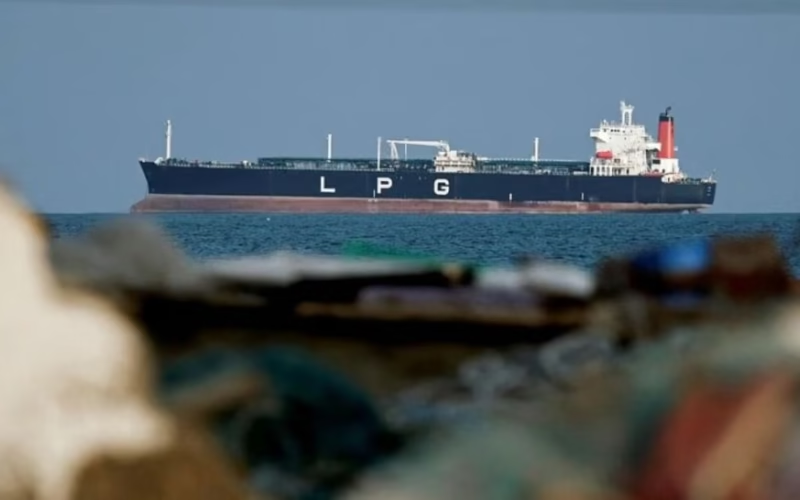
Tehran (Rajeev Sharma): A fresh flashpoint has emerged in West Asia after Iran strongly criticised the United States for intercepting and taking control of an Iranian-flagged vessel near the Strait of Hormuz, warning that the move could trigger a direct response.
Iranian authorities described the incident as a breach of established understandings and accused US forces of carrying out an unlawful boarding operation in the Gulf of Oman. Military officials in Tehran termed the action “provocative” and indicated that appropriate steps would be taken in response.
On the other hand, US officials defended the operation, stating that the vessel had ignored repeated instructions and crossed into a restricted maritime zone enforced under a naval blockade. According to Washington, the interception was carried out after the ship failed to alter its course despite multiple warnings.
The situation has further intensified diplomatic rhetoric between the two sides. Iran’s First Vice President Mohammad Reza Aref stressed that the country cannot be expected to guarantee safe navigation in the region while simultaneously facing economic restrictions on its oil trade.
He warned that continued pressure on Iran could have wider consequences beyond the region, particularly affecting global energy supplies. The Strait of Hormuz remains one of the world’s most crucial oil transit corridors, and any instability there is closely watched by international markets.
Analysts believe the latest incident adds to an already fragile security environment in the Gulf, where ongoing geopolitical tensions have raised concerns about shipping safety and the uninterrupted flow of energy resources.
