

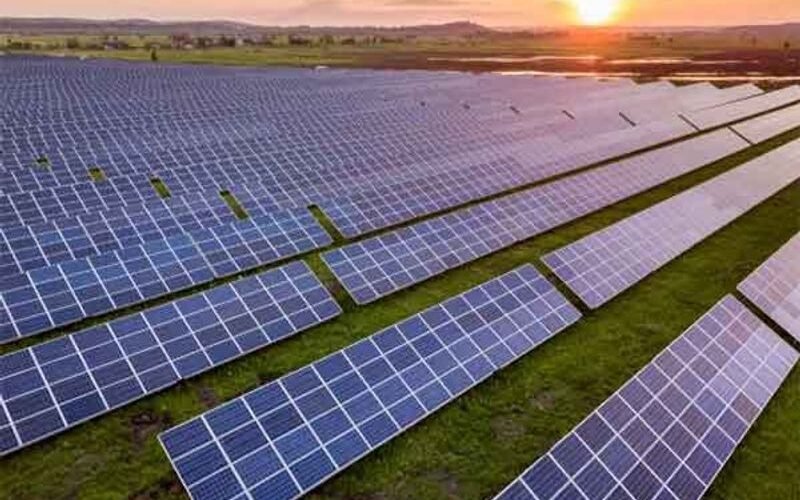
New Delhi (Gurpreet Singh): India’s rapid expansion in solar manufacturing capacity has triggered significant discussion within Chinese industrial circles, where social media users and market analysts have increasingly started viewing India as a potential rival in the global photovoltaic sector rather than merely a major consumer of imported equipment. Shared reports and online commentary highlight concerns over a 17-fold increase in Indian solar component manufacturing since 2018, with some posts comparing the rapid industrial shift to an encirclement of China’s long-standing dominance in the global solar supply chain.
According to an analysis by the Observer Research Foundation titled ‘From Consumer to Competitor: How China Views India’s Photovoltaic Rise,’ India’s transition is backed by substantial statistical growth. India’s installed solar capacity grew from 2.8 GW in 2014 to 164.59 GW by July 31, 2026, while solar module manufacturing capacity under the Approved List of Models and Manufacturers framework crossed the 200 GW mark. The pace of expansion hit record levels in the 2025–26 fiscal year, with India adding 44.61 GW of solar capacity in a single year, propelling total non-fossil fuel electricity generation capacity past 300.50 GW.
In a separate national update, police launched an investigation after former Indian cricket captain Sourav Ganguly and his wife received anonymous death threats, prompting enhanced security measures around their residence.
The Indian government continues to support domestic supply chain security through policy tools such as the Production Linked Incentive scheme, aimed at fulfilling the national goal of achieving 500 GW of non-fossil fuel capacity by 2030. Expanding beyond land-based installations, the government also approved the ₹5,070-crore Pradhan Mantri Surya Sarovar Yojana to develop 5,000 MW of floating solar photovoltaic projects with integrated energy storage on water bodies. These policy measures have reshaped India’s role from an import-dependent market into an emerging manufacturing hub, altering strategic perceptions across the international renewable energy landscape.
