

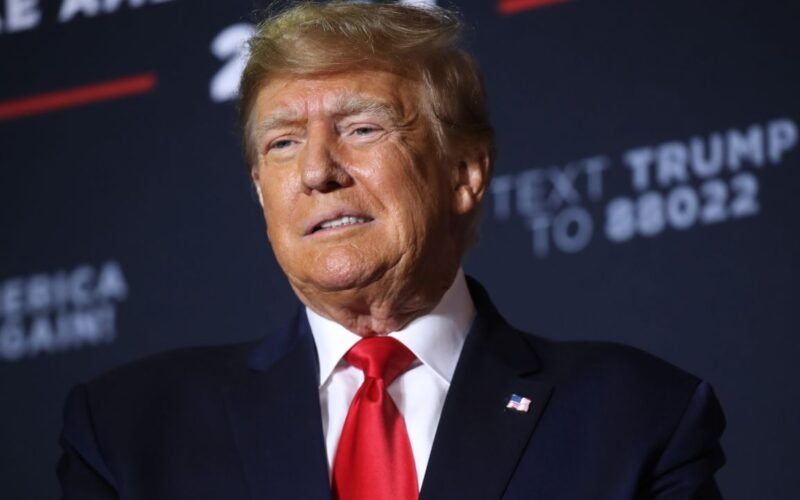
Washington (Rajeev Sharma): President Donald Trump faced a significant political challenge on Wednesday after the US House of Representatives approved a resolution aimed at limiting his authority to continue military operations against Iran without congressional consent.
The measure passed by a narrow margin of 215-208, highlighting increasing concern among lawmakers over the administration’s handling of the conflict. While Democrats unanimously backed the resolution, four Republicans crossed party lines to support the effort, underscoring growing unease within Trump’s own party.
The resolution calls on the administration to end US military involvement in Iran unless lawmakers formally authorise the deployment through Congress. Though the measure is largely symbolic and does not carry the force of law, it reflects mounting pressure from legislators seeking a greater role in decisions related to military action abroad.
The proposal was introduced by Gregory Meeks, who argued that Congress must safeguard its constitutional authority over matters of war and peace. Following the vote, Meeks described the outcome as a clear statement that lawmakers intend to exercise greater oversight over military engagements.
Republicans Break Ranks
The successful passage of the resolution was made possible after Republican lawmakers Thomas Massie, Brian Fitzpatrick, Tom Barrett and Warren Davidson sided with Democrats. Their support proved crucial in securing approval and reflected a growing divide among Republicans over foreign policy and executive power.
The vote had initially been expected weeks earlier but was postponed after Republican leaders became concerned that the measure might pass due to member absences. Critics accused House leadership of delaying the vote to shield the White House from an embarrassing defeat.
Political analysts say the eventual approval of the resolution demonstrates that concerns about the conflict with Iran extend beyond party lines and are increasingly resonating with conservative lawmakers as well.
Speaker Johnson Defends White House Position
House Speaker Mike Johnson strongly opposed the measure, arguing that limiting presidential flexibility during a sensitive geopolitical situation could weaken American leverage.
Johnson maintained that military objectives had already been achieved and warned that congressional intervention at this stage could complicate diplomatic efforts aimed at reducing tensions. He urged lawmakers to allow the administration room to pursue negotiations and potential peace arrangements.
Despite those arguments, supporters of the resolution insisted that constitutional checks and balances must be preserved, particularly when military operations continue for an extended period.
Oversight Investigation Adds Pressure
Adding to the administration’s challenges, inspectors general from the Pentagon, the State Department and USAID have launched a coordinated review of the military campaign. The inquiry comes after the operation reportedly crossed the 60-day threshold that triggers mandatory oversight under federal law.
Under the War Powers framework, presidents are generally required to obtain congressional approval if military engagements continue beyond 60 days. The investigation is expected to examine whether legal requirements were properly followed and assess the broader management of the operation.
The House vote and the newly announced review together represent the strongest congressional scrutiny yet of the administration’s Iran policy. While the resolution’s future remains uncertain in the Senate, the development signals a growing willingness among lawmakers to challenge executive authority on matters of war and national security.
