

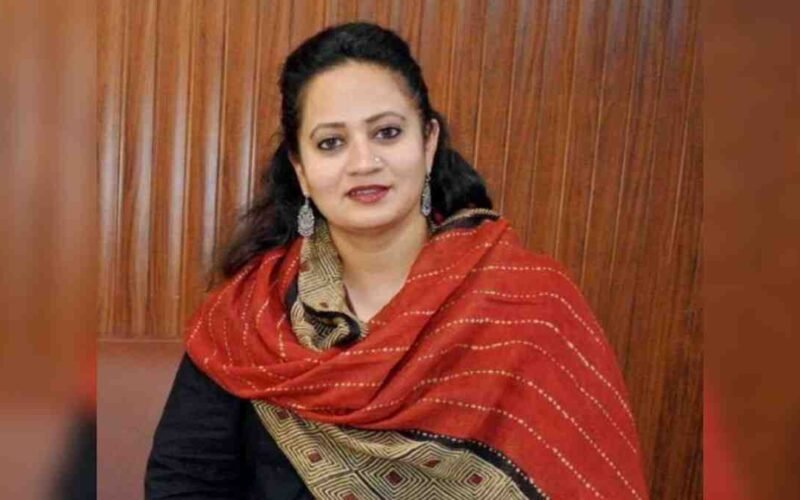
Chandigarh (Balwinder Singh): Haryana Health, Medical Education, Research, and AYUSH Minister Aarti Singh Rao stated that traditional AYUSH healthcare systems play a critical role in managing and preventing chronic and incurable diseases. She urged citizens across the state to prioritize traditional and ancient medical practices to address health issues at their root causes.
The Health Minister noted that changing lifestyles and daily routines have led to an increase in chronic conditions, driving a global surge in interest toward AYUSH systems, including Ayurveda, Yoga, Naturopathy, Unani, Siddha, and Homoeopathy. Highlighting recent efforts, she shared that during the state’s Rashtriya Poshan Maah/Seva Pakhwada campaign, the AYUSH Department organized approximately 1,771 health camps across Haryana, offering free health check-ups and consultations to over 10,900 citizens.
Detailing the expansion of healthcare infrastructure in the state, Aarti Singh Rao emphasized the government’s commitment to delivering quality medical services, medical education, and health awareness to rural and remote communities. To strengthen institutional care, Haryana currently operates four major Ayurvedic hospitals: a 100-bed facility in Kurukshetra, a 25-bed hospital in Bhiwani, a 10-bed hospital in Charkhi Dadri’s Imlota village, and a 100-bed hospital in Narnaul. Additionally, a Unani hospital is functional at Sihol in Palwal, alongside a Homoeopathic hospital in Ambala’s Chandpura.
The state’s AYUSH network extends extensively to the primary and grassroots levels. Six Ayurvedic Primary Health Centres are operational across Kaithal, Panipat, Rohtak, Sirsa, and Jind. To make Panchakarma therapy widely accessible, the state runs six specialized Panchakarma centers in Ambala, Panchkula, Karnal, and Jhajjar, complemented by 21 Panchakarma centers under the National Health Mission. Across the state, 515 Ayurvedic, 16 Unani, and 24 Homoeopathic dispensaries actively serve local communities, while the Institute of Indian Medical Systems and Research in Panchkula functions as a hub for research and innovation.
Under the National AYUSH Mission, regional healthcare integration has been further strengthened through 21 AYUSH wings in district hospitals, 102 AYUSH IPDs at Community Health Centres (CHCs), and 106 AYUSH OPDs at Primary Health Centres (PHCs), primarily serving rural and underserved areas. In terms of medical education, Shri Krishna AYUSH University in Kurukshetra is leading higher learning, supported by one government Ayurvedic college and 12 private Ayurvedic colleges operating across the state. Reaffirming the centuries-old reliability of traditional systems, the Minister appealed to the public to adopt AYUSH practices as part of their daily lifestyle for long-term health and wellness.
