

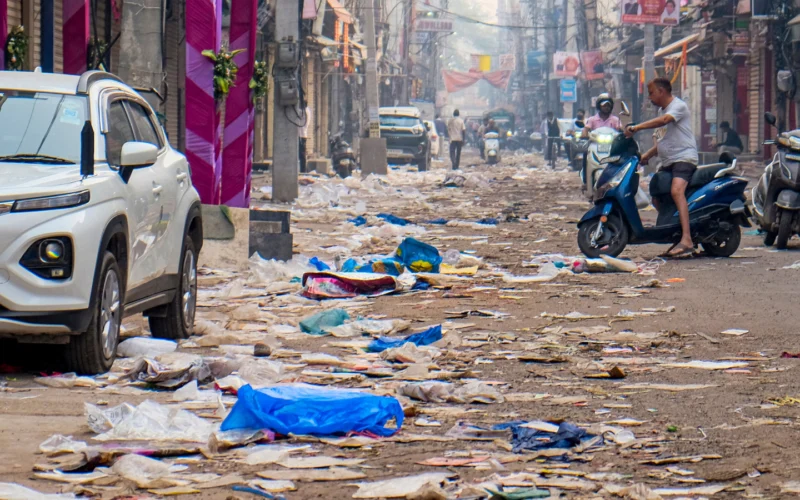
Chandigarh (Gurpreet Singh): Punjab is witnessing a sharp deterioration in air quality as smoke from Diwali firecrackers combines with emissions from agricultural fires, vehicular traffic, construction activities and garbage burning. Several cities across the state have reported alarming pollution levels, with Mandi Gobindgarh recording an Air Quality Index (AQI) of 445 on Sunday, placing it in the severe category.
The pollution situation worsened after Diwali celebrations, when fireworks continued late into the night despite government-imposed restrictions on their use. In several urban areas, crackers were reportedly burst well beyond the permitted hours, leaving residential localities covered in smoke.
Residents complained of a strong smell of burnt fireworks, while smoke and suspended pollutants remained in the atmosphere even after the celebrations ended. The impact was compounded by the ongoing paddy harvesting season, during which stubble-burning incidents have added to the pollution burden.
Mandi Gobindgarh, known for its steel industry, recorded the highest pollution level among the reported locations. The town’s AQI had already reached 319 on November 6, making it Punjab’s most polluted location at the time. Its subsequent rise to 445 has raised further concerns about the deteriorating air quality.
Other major cities had also experienced unhealthy air conditions ahead of Diwali. On November 7, Ludhiana registered an AQI of 281, followed by Khanna at 249 and Jalandhar at 260. All three cities fell under the poor air quality category. Patiala recorded 184, placing it in the moderate category, while Amritsar continued to experience very poor air quality.
The growing number of farm fires is another major concern for the state. Punjab’s seasonal stubble-burning count had crossed 3,300 incidents by November 7, adding to emissions from urban sources and firecracker smoke.
Under the national AQI classification, readings from 0 to 50 indicate good air quality, while 51–100 are considered satisfactory. Levels between 101 and 200 fall under the moderate category, 201–300 are classified as poor, and 301–400 as very poor. An AQI between 401 and 500 is categorised as severe.
The worsening pollution has also prompted concerns over its potential impact on public health. Health experts caution that prolonged exposure to polluted air can cause breathing difficulties and worsen existing conditions such as asthma, heart disease and other respiratory illnesses. Eye, nose and skin allergies may also become more severe.
Children, senior citizens and individuals with pre-existing respiratory or cardiovascular conditions remain particularly vulnerable. With firecracker emissions and agricultural smoke adding to the existing pollution load, air quality across Punjab remains a serious concern.
