

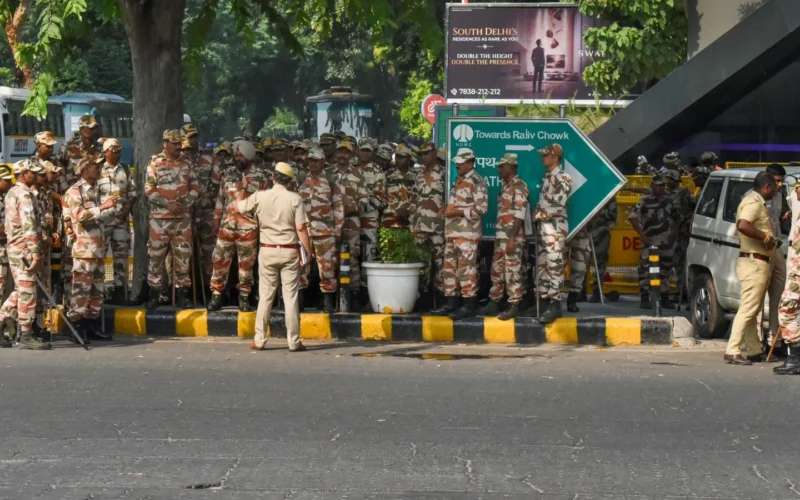
Delhi (Rajeev Sharma): Delhi Police is considering a new regulatory framework for public meetings, protests and demonstrations at the prominent Ramlila Ground in Central Delhi. Under the proposed guidelines, gatherings would be restricted to a maximum of 50,000 people, while events would be permitted only between 10 am and 5 pm. The move is aimed at strengthening crowd management and ensuring that large public gatherings do not create security or traffic-related difficulties.
According to a senior police official, a draft Standard Operating Procedure (SOP) has been forwarded to Delhi Police Headquarters for examination and approval. The proposal is still at a preliminary stage, and its provisions have not yet received final clearance. Under the suggested process, organisers would first have to obtain confirmation from the Municipal Corporation of Delhi regarding the availability of the venue before seeking police permission. Applications would generally need to be submitted at least 10 days before the scheduled event.
The draft framework also outlines several responsibilities for event organisers, particularly concerning traffic regulation and crowd movement. They would be required to coordinate with traffic officials, arrange adequate parking and identify specific locations for passenger drop-offs. Keeping roads, entry points and emergency access routes clear would also be a key condition for receiving permission. On the security front, carrying firearms, swords, spears, sharp-edged objects and other prohibited articles would not be allowed. Drone operations around the venue would similarly require advance authorisation.
In addition to security and traffic arrangements, organisers would have to ensure the availability of essential public facilities, including drinking water, medical support and sanitation services. Proper waste management would also form part of the proposed requirements. The police have clarified that the draft is currently awaiting scrutiny at the headquarters level, with further decisions to be taken after review by the competent authorities. The new rules will become operational only after receiving formal approval.
