

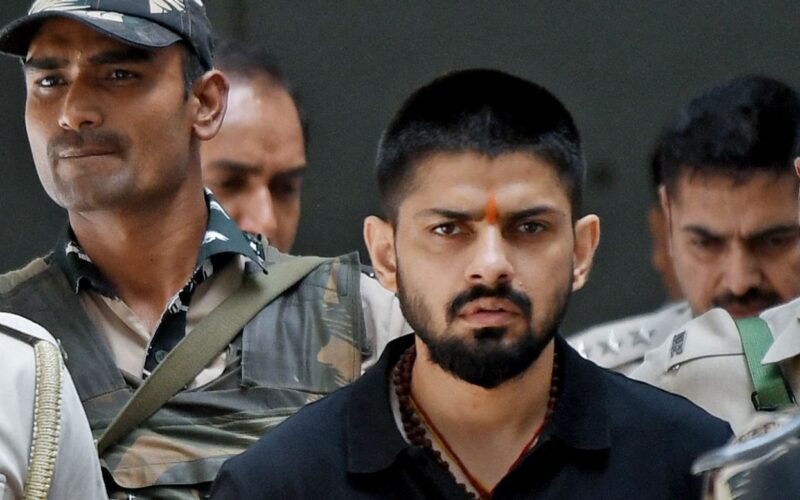
Ottawa (Rajeev Sharma): A Canadian intelligence assessment has reportedly shed light on how the Lawrence Bishnoi gang allegedly used immigration pathways, including student visas, to find and recruit young people for criminal activities in Canada.
The classified assessment, prepared by the Canada Border Services Agency (CBSA) and titled “The Bishnoi Gang: An Emerging Threat in Canada,” was circulated among immigration officials in December 2025, according to the information that has emerged from recent court proceedings.
The document reportedly describes the gang as an expanding transnational threat, with extortion, shootings and intimidation of members of Canada’s South Asian community among its principal activities.
Young immigrants allegedly targeted
According to the assessment, the gang’s recruitment strategy allegedly focused on young Indian nationals who were financially vulnerable or struggling to find employment after arriving in Canada.
The report reportedly identified communities including Brampton and Edmonton as areas where recruitment efforts were particularly active. Investigators alleged that some recruits were drawn into criminal activities after being approached through personal or community networks.
One of the cases highlighted in the assessment involves Abhijeet Kingra, who reportedly arrived in Canada on a student visa in 2018.
Kingra later told authorities during deportation proceedings that he had been facing financial difficulties. The report alleged that he was subsequently recruited to carry out a shooting in return for payment.
Shooting at AP Dhillon’s residence
In September 2024, Kingra was accused of opening fire at the British Columbia residence of Punjabi singer AP Dhillon.
According to the allegations cited in the assessment, 14 rounds were fired at the property, while an accomplice allegedly set vehicles parked outside on fire.
The incident was among a series of violent episodes that Canadian authorities have examined in connection with alleged criminal networks operating within the country’s South Asian communities.
Extortion allegedly became major source of revenue
The intelligence report reportedly said that gang-linked individuals increasingly targeted Indian-origin business owners with extortion demands.
Threats were allegedly delivered through phone calls and messaging applications, with victims being warned of violence if they failed to pay. In some cases, attackers allegedly carried out shootings at homes, restaurants, shops or other businesses.
The report also claimed that videos of some attacks were subsequently posted on social media, allegedly to establish the gang’s involvement and frighten other potential targets.
Goldy Brar’s alleged role
The CBSA assessment reportedly identified Goldy Brar, a close associate of Lawrence Bishnoi, as a key figure in the alleged recruitment operation.
According to the report, Brar travelled to Canada in 2017 on a student visa and initially indicated that he intended to study at Thompson Rivers University in British Columbia.
Canadian investigators reportedly believe that he later became involved in recruiting young Indian nationals into the network.
Brar is also wanted by US authorities. The FBI has placed him on its wanted list and announced a reward for information leading to his arrest. A US federal warrant has reportedly linked him to allegations involving racketeering, extortion and drug trafficking.
Report cites crime figures involving Indian students
The intelligence assessment reportedly included statistics concerning criminal cases involving Indian nationals who entered Canada through study permits.
It claimed that around 4,000 Indians who had entered Canada on study permits were charged with approximately 17,929 offences between 2019 and 2023. About 4,920 of those charges were described as serious or related to organised crime.
The report further stated that Indian citizens in Canada holding study permits were subject to more than 13,000 criminal charges in 2024.
However, these figures should not be interpreted as suggesting that Indian students or international students as a group are connected to organised crime. The alleged recruitment described in the assessment concerns specific individuals and criminal networks.
The reported contents of the CBSA assessment are likely to intensify scrutiny of how criminal organisations exploit immigration and temporary-resident systems while Canadian authorities continue investigating alleged transnational crime networks operating across the country.
