

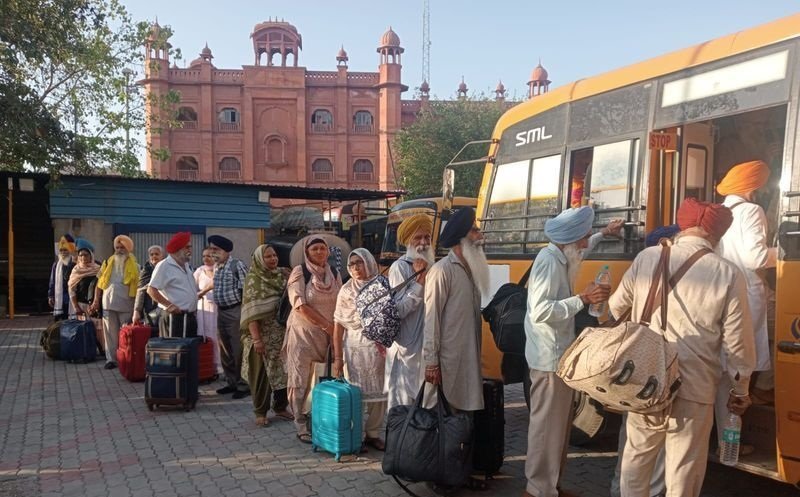
Amritsar (Gurpreet Singh): Calls are growing for Pakistan to allow Sikh pilgrims travelling to India to use the Wagah-Attari Joint Check Post, after more than 100 Pakistani Sikhs with valid Indian visas were reportedly stopped from boarding a flight for their onward journey.
The demand follows an incident in which 104 Pakistani Sikh pilgrims were allegedly prevented from flying from Faisalabad to Sharjah on Thursday. The group was scheduled to travel onward to India and visit Gurdwara Hemkunt Sahib in Uttarakhand.
According to reports, the pilgrims were stopped because they did not possess a no-objection certificate, despite holding valid Indian visas.
Former National Commission for Minorities chairman Tarlochan Singh has urged Pakistan to provide an alternative land route for Sikh pilgrims, arguing that travelling to India by air, particularly through the Gulf, places a significant financial burden on many families.
He said a large section of Pakistan’s Sikh community belongs to the middle class and may find air travel prohibitively expensive. Allowing pilgrims to cross through the Wagah-Attari crossing, he said, would provide a more affordable and practical option.
Tarlochan also pointed to the continued movement of Sikh groups from India to Pakistan for religious pilgrimages. Although regular travel between the two countries has remained restricted since Operation Sindoor, he said Indian authorities have continued permitting Sikh jathas to travel to Pakistan through the joint check post.
He argued that Pakistan could adopt a similar arrangement for Sikh pilgrims seeking to travel to India.
Demand for compensation
The issue has also drawn criticism from members of Pakistan’s Sikh community.
In a video message, Mahinder Pal Singh, a former parliamentary secretary in Punjab’s Ministry of Human Rights and Minority Affairs, called for the affected pilgrims to be compensated for the financial losses caused by the disruption.
He also sought an apology from the Pakistani government and demanded action against officials responsible for preventing the pilgrims from continuing their journey.
According to Mahinder Pal Singh, facilitating the pilgrims’ travel through the Wagah-Attari route would send a positive message about Pakistan’s treatment of its Sikh minority.
“These steps,” he said, “would show the world that Pakistan welcomes the Sikh community and takes care of them.”
Pilgrims seek a way forward
Papinder Singh, who leads the Pakistani Sikh jatha, said the pilgrims themselves had raised the issue with the Pakistani authorities.
According to him, the community was informed that the government was considering the request.
The proposed land route would potentially offer the pilgrims an alternative to expensive air travel while also providing a direct route between the two countries for religious journeys.
The episode has renewed attention on the difficulties faced by Sikh pilgrims travelling between India and Pakistan, where restrictions on cross-border movement can complicate visits to important religious sites.
For the pilgrims affected by the latest incident, the immediate demand remains the same: permission to complete their journey to India and visit the religious shrine they had planned to reach.
