


Calgary (Rajeev Sharma): Calgary’s police service is asking City Council for hundreds of additional positions as rising demand for policing collides with a larger question facing City Hall how to fund public safety while managing pressure on taxpayers and competing demands for municipal services.
The Calgary Police Commission is seeking funding for 523 additional positions over the next four years, including 309 police officers and 214 civilian positions. The request will become part of Calgary’s 2027–2030 budget deliberations, with City Council expected to make final decisions on the proposed police budget in November.
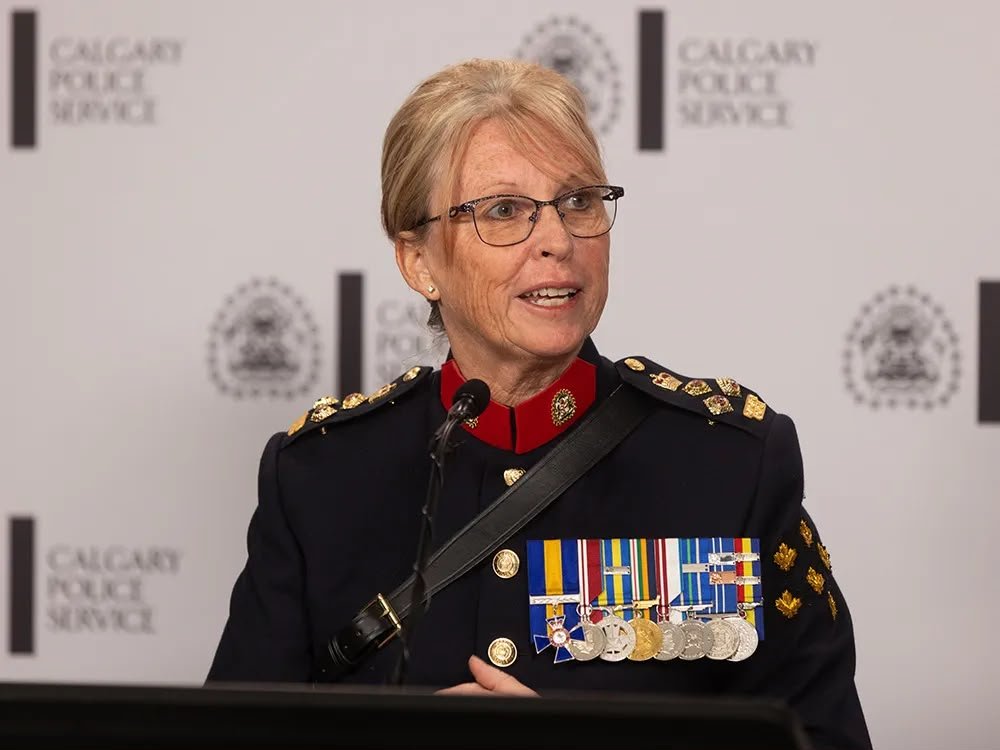
The push for more resources comes after what police officials describe as an especially demanding summer. Calgary Police Service Chief Katie McLellan and other senior officers have pointed to increasingly complex calls that can require large numbers of officers for extended periods, leaving fewer resources available for other emergencies across the city.
On one recent 12-hour shift, Calgary police responded to 915 calls for service, with approximately 330 calls requiring two or more police units. One road-rage incident alone required 27 police units and more than eight hours of police service time after three officers were assaulted while taking a suspect into custody. Other incidents included a domestic conflict requiring nine units for approximately four hours and an injury collision involving eight units for about two hours.
Police officials say the problem is not simply the number of calls but the resources required to manage increasingly complicated incidents. Deputy Chief Cliff O’Brien has also warned that the workforce is tired, with officers increasingly relying on overtime and call-out shifts to maintain operational coverage.
CPS says Calgary currently has approximately 144 police officers per 100,000 residents, compared with a national average of about 178 officers per 100,000. Police argue that continued population growth and changing demands are putting additional pressure on existing resources.
The proposed expansion would not involve police officers alone. The plan calls for 214 civilian positions, including specialized roles such as crime analysts, lawyers, mechanics and other technical and support personnel. CPS says adding civilian capacity could allow sworn officers to spend more time on frontline policing, investigations, crime prevention and community safety.
The request now enters a much broader municipal budget debate. Calgary’s approved 2026 operating budget is about $4.6 billion, while the city’s capital budget is approximately $3.7 billion. The 2026 budget already included $94 million in public-safety investments, covering areas such as downtown safety, 9-1-1 operations, police recruitment, vehicles, facilities and transit safety.
The new police request will therefore be examined alongside competing demands for roads, transit, infrastructure, housing, emergency services and other municipal programs. For City Council, the issue will be not only whether additional police resources are required, but also how much additional funding can be committed while maintaining affordability and financial sustainability.
CPS is also seeking to change how officers spend their time. The service currently estimates that about 58 per cent of policing time is reactive, involving emergency calls and other responses, while approximately 20 per cent is spent on proactive activities, including crime prevention, traffic safety, investigative follow-up, warrants and community engagement.
Under the proposed plan, CPS wants to increase the share of proactive policing while reducing the proportion of time consumed by reactive calls. Police officials argue that additional staffing would provide greater capacity to prevent crime and investigate cases rather than continually moving resources from one emergency to another.
The financial impact, however, will extend beyond salaries. Additional officers require recruitment and training, while expanded staffing also creates ongoing costs for vehicles, equipment, technology, facilities and other operational requirements. Those costs will form part of the financial calculations facing City Council.
The coming budget debate could therefore become a major public-safety and spending issue for Calgary. Police are making the case that additional resources are necessary to keep pace with a growing city and increasingly demanding calls, while Council must determine how those requests fit within Calgary’s overall financial capacity and competing priorities.
The final decision is expected during the November 2026 budget deliberations, when Calgary councillors will determine the city’s spending priorities for the next four-year planning cycle.
