

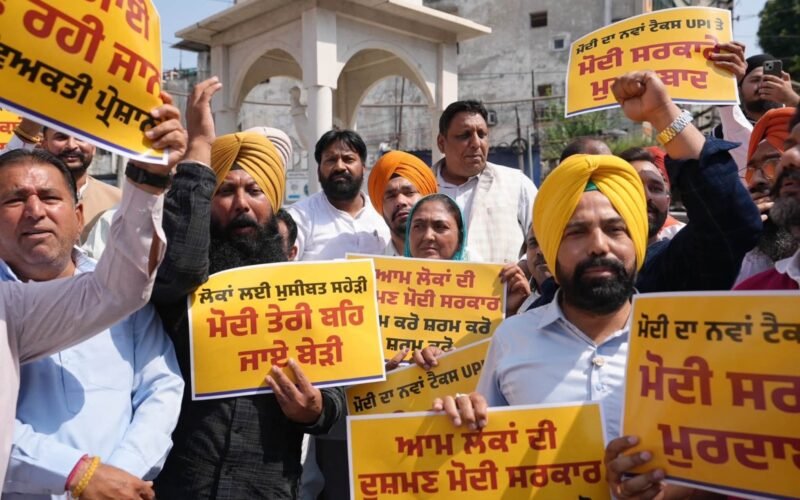
Chandigarh (Gurpreet Singh): The Aam Aadmi Party (AAP) on Friday held protests in Jalandhar and Sujanpur in Pathankot against the BJP-led Central Government’s decision to impose additional charges on certain UPI (Unified Payments Interface) merchant transactions. During the protests, angry people raised slogans against the Central Government and burnt an effigy of Prime Minister Narendra Modi.
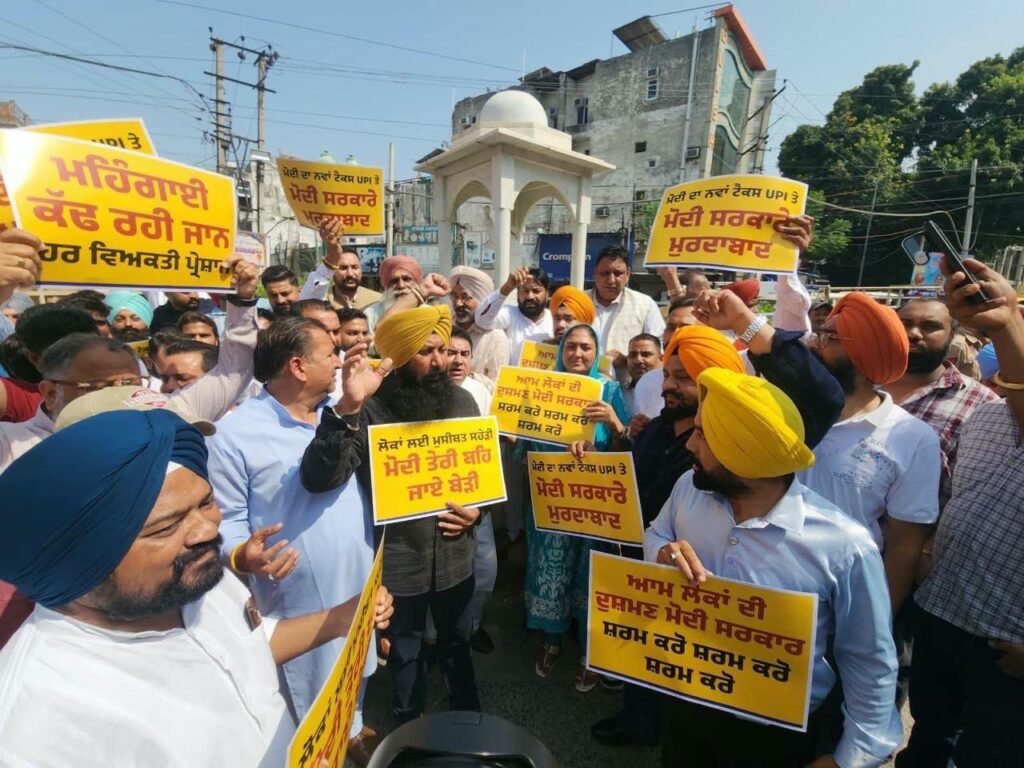
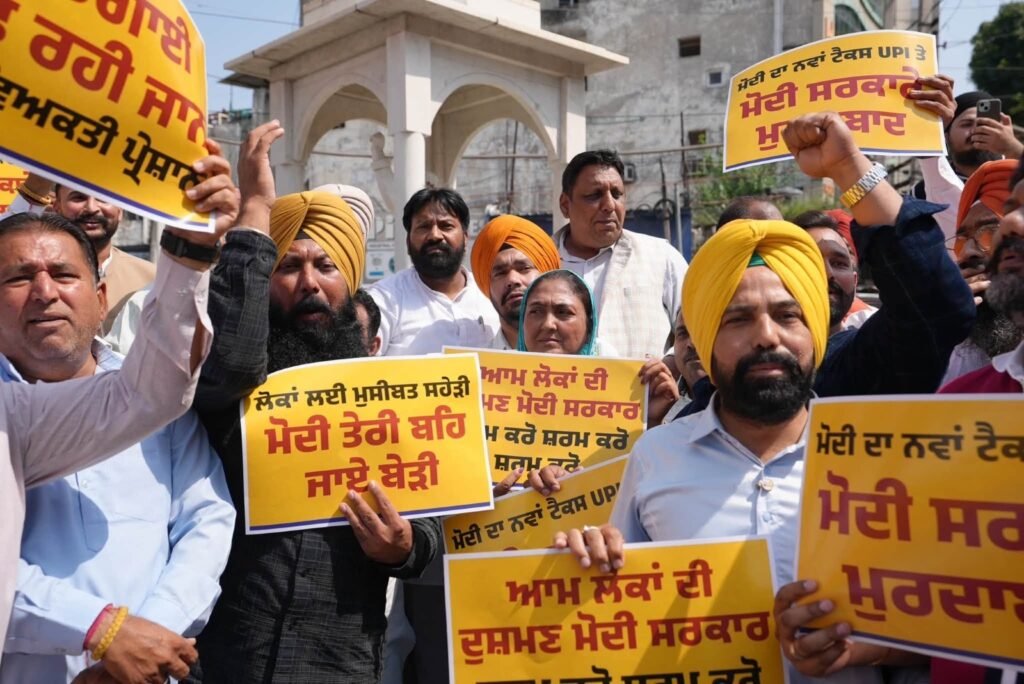
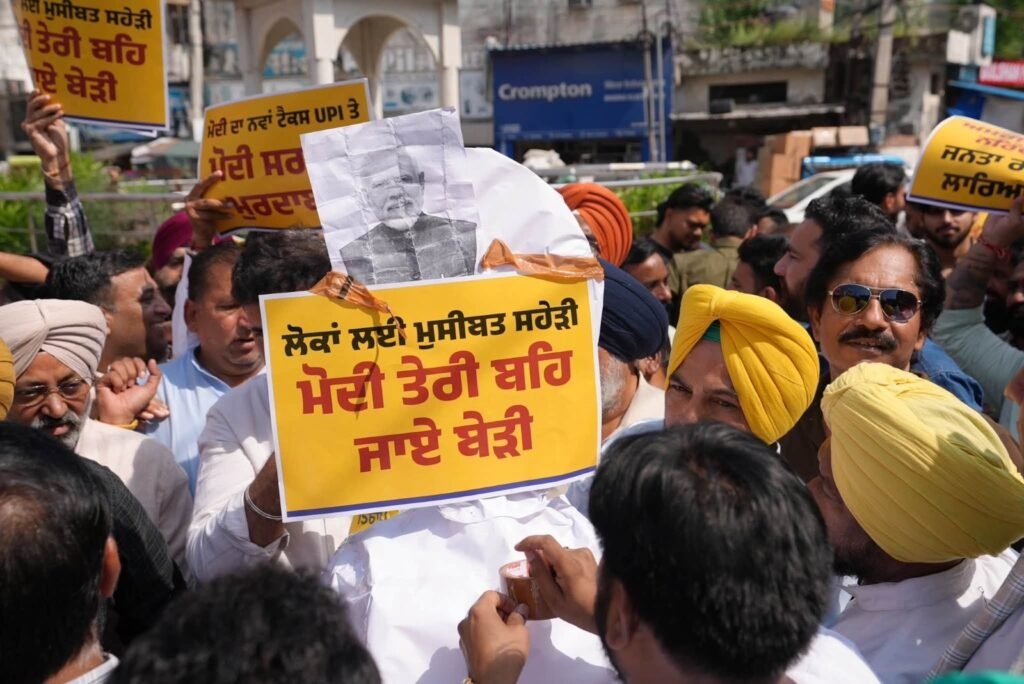
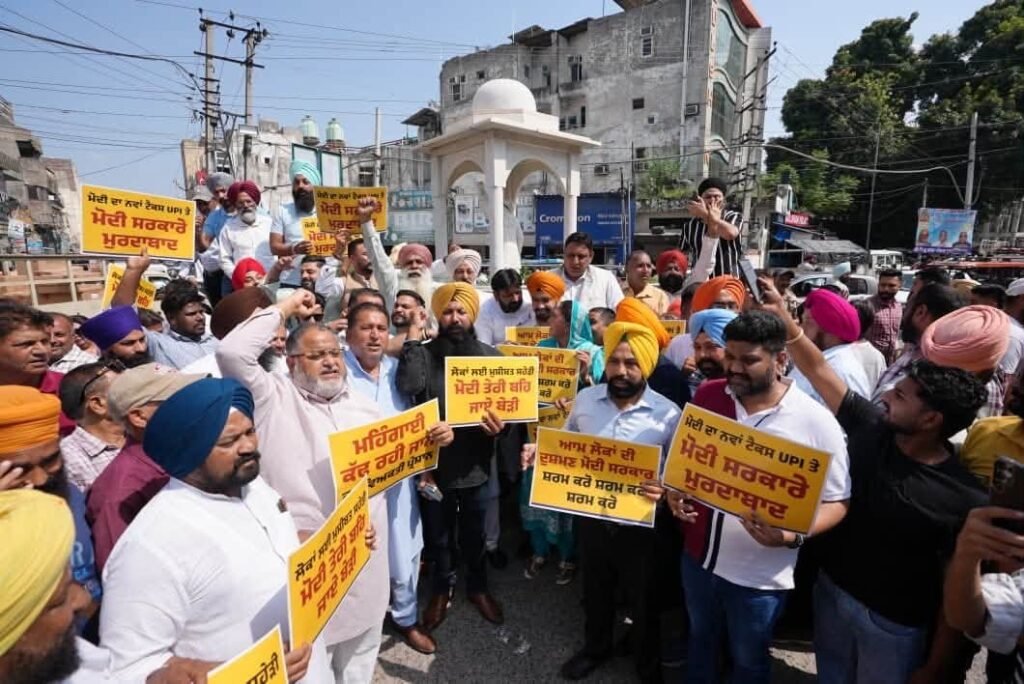
A massive protest was organised at Shaheed Bhagat Singh Chowk in Jalandhar under the leadership of senior AAP Punjab leader Pawan Kumar Tinu. Addressing party volunteers, Pawan Kumar Tinu said, “The decision of the BJP-led Central Government to impose additional charges on UPI transactions is a direct assault on the pockets of the common people. This decision will put a major economic burden on traders, students and ordinary citizens of the country.”
Pawan Kumar Tinu said, “The policies of the BJP Government have always been such that instead of providing relief to the common people, they disrupt their budgets. At a time when people are already struggling with inflation, the Central Government should have provided relief instead of introducing another financial burden.”
Highlighting the evolution of digital payments in the country, he said, “The Modi Government first encouraged every citizen of the country to adopt digital transactions. After this, restrictions were imposed in banks that cash dealings of more than ₹50,000 could not be made. The government itself encouraged people to move towards digital payments.”
The AAP leader said, “Now, after years of making people accustomed to digital transactions, every small and big trader, shopkeeper and common citizen has become completely dependent on UPI payments. At this stage, the government is imposing a new financial burden on merchant transactions. This is completely unfair to the people.”
Pawan Kumar Tinu said, “UPI has become an integral part of everyday business and commerce. Small shopkeepers, traders and businesses have adopted digital payments because the government promoted this system. The government should not now make these transactions more expensive by imposing additional charges.”
The AAP demanded the immediate withdrawal of the decision. Tinu said, “The Central Government must immediately withdraw this anti-people decision. If the government refuses to listen to the voice of the people, the Aam Aadmi Party will take this fight from every corner of Punjab to Delhi and intensify the struggle for the rights of the common people.”
Meanwhile, AAP leaders said, “Today, people from all sections of society are coming together to hold protest marches and sit-ins against the BJP Government. The people of the country are already suffering from inflation. At such a time, the Modi Government has imposed another economic burden on the people in the name of UPI charges.”
They said, “The Central Government should understand the difficulties being faced by ordinary families and traders instead of continuously increasing their financial burden. The people will not remain silent against policies that adversely affect their daily lives and livelihoods.”
On the issue of drugs, AAP leaders said, “The rally organised by the BJP against drugs has completely failed. The people of Punjab know who remained in power when the drug crisis became a major challenge for the state. Today, the youth and common people are standing shoulder to shoulder with the AAP and the Bhagwant Mann Government in the fight against drugs.”
An AAP volunteer said, “Everyone knows that the previous Akali-BJP Government was responsible for bringing drugs into Punjab. The AAP Government has taken strict steps to eliminate drugs from the state. Strict action is being taken against drug peddlers and drug networks are being dismantled.”
The volunteer further said, “The action being taken against the drug trade is producing clear results on the ground. The AAP Government is committed to continuing this fight and protecting the youth of Punjab from drugs.”
The AAP leaders said the party would continue to raise issues affecting the common people and oppose policies that put additional economic pressure on traders, students and ordinary citizens.
