

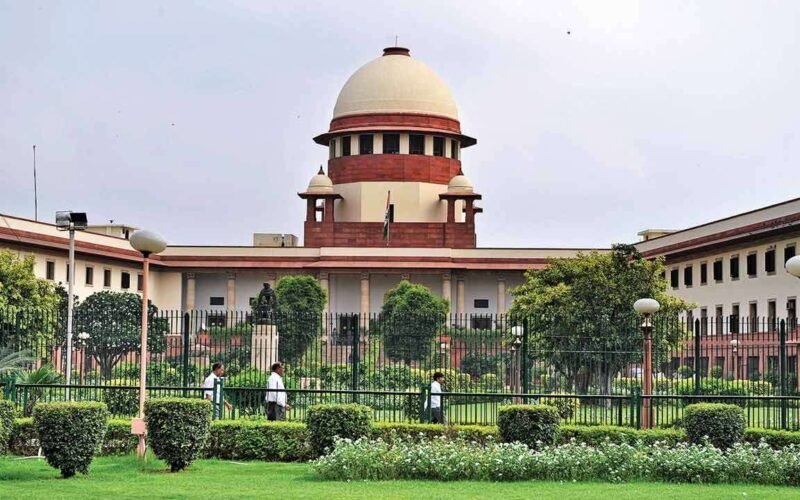
New Delhi (Gurpreet Singh): The Supreme Court on Thursday said it would examine who qualifies as a journalist and whether accredited mediapersons should receive greater protection than self-proclaimed reporters while covering protests.
A Bench comprising Chief Justice of India Surya Kant and Justices Joymalya Bagchi and V Mohana observed that journalistic freedom must be balanced with the administration of public order and law. The Bench also remarked that “self-proclaimed journalists may not have the same protection as accredited journalists”.
The observations came as the court asked a high-powered committee headed by former Supreme Court judge Justice R Subhash Reddy to examine petitions concerning the alleged detention of seven journalists, assault and obstruction of mediapersons covering protests in Delhi on October 10 and 11, 2026.
Supreme Court Examines Plea For Uniform Protest Guidelines
The Bench also agreed to examine a petition filed by a lawyers’ body seeking uniform guidelines and a standard operating procedure for regulating public demonstrations and protests.
It issued notices to the Centre, CJP leaders Abhijeet Dipke, Saurav Das and Ashutosh Ranka, among others, in connection with the matter.
The proceedings come amid allegations by several media organisations that journalists faced police excesses while covering protests at Jantar Mantar in Delhi.
The petitions were filed by the Network of Women in Media, Free Speech Collective, Delhi Union of Journalists and other media bodies. They raised concerns over the alleged detention and assault of journalists and obstruction of their work during the demonstrations.
Delhi Police Draws Distinction Between Journalists And Reel-Makers
In its affidavit before the Supreme Court, Delhi Police argued that social media content creators cannot automatically claim the protections available to professional mediapersons while covering protests.
The police said it was necessary to determine whether “reel-makers can be elevated to the status of journalists or reporters”. It maintained that content creators who make videos for social media should not automatically be treated as journalists for the purpose of claiming press-related protection.
The affidavit was filed earlier this month by Delhi Police Joint Commissioner Surender Kumar in response to the petitions challenging the police action during protests against Chief Election Commissioner Gyanesh Kumar at Jantar Mantar last month.
According to the police, some participants in what it described as “illegal protests” were content creators making YouTube reels while carrying cameras and microphones. This, the affidavit claimed, made it difficult for police personnel to distinguish between genuine journalists and reel-makers during the demonstrations.
Why The Journalist Protection Question Matters
The Supreme Court’s examination could bring attention to the distinction between professional journalists and independent digital content creators covering public events.
The issue also raises questions about how press freedom and the safety of people documenting protests should be protected while allowing police to maintain public order.
The court has not yet laid down a final definition of who qualifies as a journalist or ruled that accredited journalists must receive a separate category of protection. The matter will be examined further through the committee’s consideration of the petitions and the proceedings before the Bench.
