

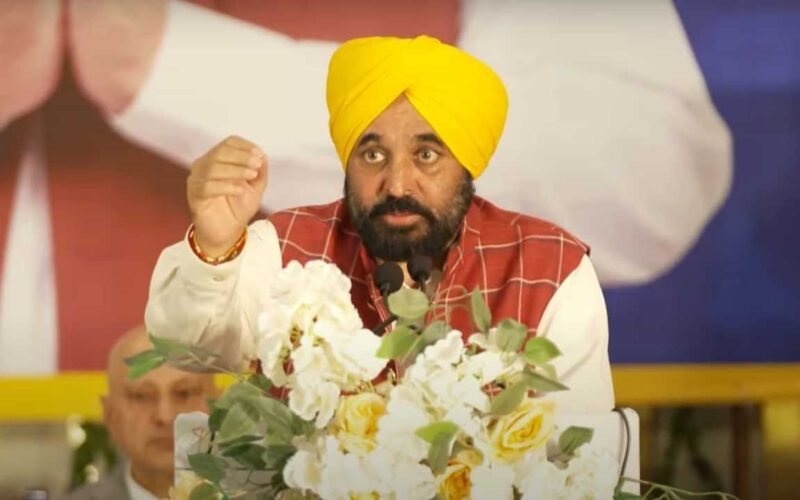
Decades ago, Punjab was known primarily as the breadbasket of India. Today, a quiet but profound economic transformation is sweeping across the state. Under the visionary stewardship of Chief Minister Bhagwant Singh Mann, Punjab has shattered historical precedents, transitioning from an agrarian powerhouse into a front-ranking global industrial and manufacturing hub.
The numbers tell an undeniable story of governance-led success. Over the past four years, the Bhagwant Mann-led Punjab Government has secured a staggering Rs 1.89 lakh crore in industrial investment proposals. Far from just figures on a balance sheet, this massive economic influx carries a profound human impact: the potential to generate 6.31 lakh high-quality jobs for the state’s youth, fulfilling the Chief Minister’s core promise of providing lucrative employment right at home and turning the dream of ‘Rangla Punjab’ (Prosperous Punjab) into reality.
Breaking the Shackles of Red Tape: The FastTrack Punjab Revolution
For years, potential investors in Punjab faced a maze of bureaucratic delays and archaic compliance loops. Recognizing that economic growth requires administrative agility, Chief Minister Mann fundamentally restructured the state’s governance model.
The crown jewel of this reform is the newly launched Fast-Track Punjab portal alongside the innovative HUNAR Punjab platform. Moving far beyond traditional single-window claims, Fast-Track Punjab features the country’s first digital Financial Incentives Module (Passbook), enabling investors to transparently monitor and track their eligible fiscal benefits in real time. Under the strengthened Punjab Right to Business Act, the administration has institutionalized a culture of speed, guaranteeing all necessary regulatory approvals within a strict 45-day window, and providing immediate in-principle clearances in as little as 3 to 5 days for smaller projects.
Furthermore, the Mann government has drastically reduced the regulatory compliance burden, simplifying, digitizing, or decriminalizing over 2,500 business and citizen-facing compliance mandates. By introducing groundbreaking administrative measures—such as unique color-coded stamp papers to fast-track land utilization clearances—the administration has replaced traditional red tape with a red carpet.
A Masterclass in Policy: The Landmark Industrial Policy 2026
The momentum reached new heights with the unveiling of the ambitious Punjab Industrial & Business Development Policy 2026. Hailed as the most progressive industrial framework in over a decade, this policy introduces concepts never seen before in Indian governance.
In a first-of-its-kind move globally, the Mann government allows investors to curate their own tailored incentive packages from a vast menu of 20 distinct fiscal options, adapting directly to unique business models. The policy also introduces standard capital subsidies for the first time in Punjab’s history. Crucially, to ensure that medium-scale enterprises can thrive, the government lowered the eligibility threshold for the state’s generous Employment Generation Subsidy to units investing just Rs 25 crore and employing 50 workers, offering enhanced incentives for hiring women, SC/ST, and disabled employees.
Global Giants and Specialized Local Clusters
This relentless drive toward ease of doing business has ignited immense confidence among both domestic industrial houses and fortune-scale global conglomerates. Industry titans—including Tata Steel, JSW Steel, Nestlé, Cargill, Hindustan Unilever, Vardhman, and the JL Oswal Group—have either established massive new facilities or poured fresh capital into expanding their existing footprints in the state.
Crucially, the Mann administration’s economic vision reaches far beyond traditional industrial zones. While Mohali is rapidly transforming into a thriving innovation ecosystem poised to become the next Silicon Valley of India, and Ludhiana continues its dominance as a manufacturing capital, growth is being aggressively democratized across the state.
To empower micro, small, and medium enterprises (MSMEs), specialized industrial clusters have been approved across multiple districts: a advanced high-tech metal cluster in Mohali, dedicated garments and honey processing hubs in Ludhiana, and a cutting-edge cutting-tool cluster in Patiala. This ensures that the fruits of the investment boom are shared equitably across rural and semi-urban Punjab.
Fulfilling the Promise of an Economic Powerhouse
By blending aggressive policy liberalization with deeply compassionate, youth-centric governance, Chief Minister Bhagwant Singh Mann has successfully engineered a historic industrial turnaround. From state-of-the-art infrastructure to robust, transparent single-window support, Punjab is no longer just participating in India’s industrial race—it is setting the pace.
As hundreds of factories break ground and hundreds of thousands of youth find employment within their home state, the Mann government has firmly restored Punjab to its rightful place: a thriving, unstoppable economic powerhouse on the global map.
