

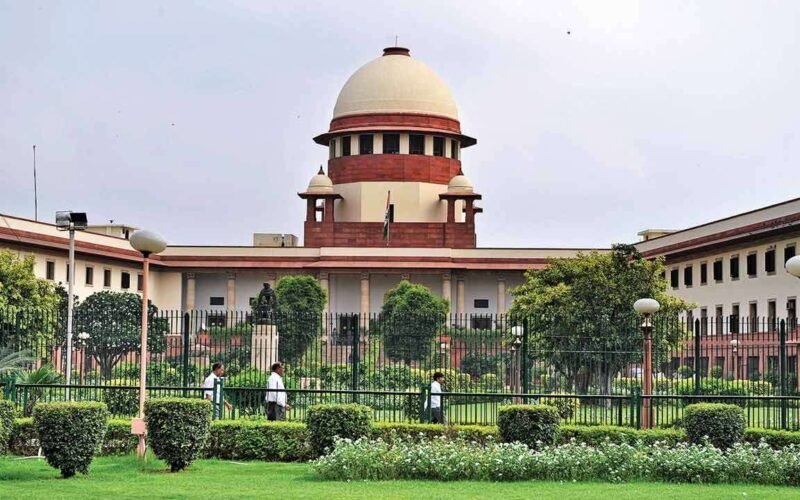
New Delhi (Gurpreet Singh): The Supreme Court has asked WhatsApp and other concerned digital intermediaries to submit details of measures they propose to take to prevent digital arrest scams and related cybercrimes in India. It has also directed law enforcement agencies across states and Union Territories to provide details of registered FIRs and the progress of investigations into such cases.
A Bench headed by Chief Justice of India Surya Kant directed the intermediaries to submit their proposals to the Indian Cyber Crime Coordination Centre (I4C) as well. The matter has been listed for further hearing on November 23.
The court asked police and law enforcement agencies to suggest measures for preventing, detecting and prosecuting digital arrest scams. It directed the Directors General of Police of all states and Union Territories to ensure compliance.
The information submitted to the court must also be forwarded to the I4C, the Bench ordered.
Supreme Court Examines RBI’s Proposed KYC Amendments
The directions came after Attorney General R Venkataramani placed before the court a note dated October 28, 2026, outlining suggestions on behalf of the Union government.
The Bench said it would examine the Reserve Bank of India’s proposed amendments to its Know Your Customer (KYC) Directions before issuing further directions. The amendments are proposed to be notified by November 30, 2026, and operationalised by December 31, 2026.
The Supreme Court reiterated that the proposed RBI regulations should include provisions requiring financial institutions to indemnify victims and pay compensation of at least the amount lost if a cyber fraud is established to have occurred because the institution failed to exercise due diligence in preventing or reporting it.
Banks May Be Required To Flag Suspicious Transactions
In an earlier order dated October 29, the court had highlighted safeguards that financial institutions should be required to follow.
These included temporarily suspending unusual or suspicious transactions that are inconsistent with a customer’s past account activity, automatically alerting the nearest police station and physically verifying the reported transactions to establish their genuineness.
The court also directed the RBI to submit a list of all authorised financial institutions at the next hearing to help monitor the implementation of the proposed regulatory measures and its directions.
WhatsApp Says It Has Taken Action Against 9,400 Accounts
During an earlier hearing, senior advocate Kapil Sibal, appearing for WhatsApp, told the Bench that the platform had taken preventive action against 9,400 accounts.
Sibal said WhatsApp would file an affidavit detailing the measures it had undertaken. He also informed the court that the platform was developing software to identify suspicious accounts and alert users.
The matter is being heard as a suo motu case titled In Re: Victims of Digital Arrest Related to Forged Documents.
