

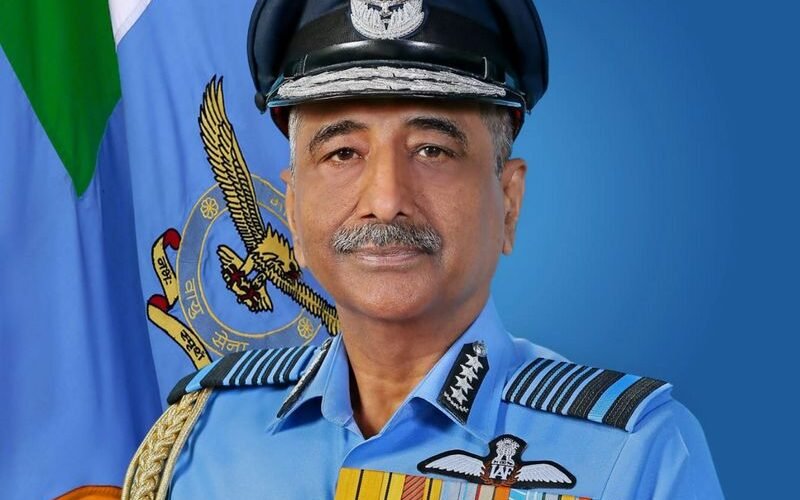
New Delhi (Gurpreet Singh): Air Chief Marshal Ashutosh Dixit, who has taken over as the 29th Chief of the Air Staff, has outlined an ambitious roadmap for the Indian Air Force (IAF), placing operational readiness, indigenous defence capabilities, technological innovation and joint operations at the centre of its future strategy.
In his first address as Air Chief on Sunday, November 1, Dixit introduced the guiding vision ‘VAYU’, built around four priorities: Vigilance, Victory and Readiness; Aatmanirbharta; Yukti; and Unity of Effort.
The roadmap comes amid an evolving security environment in which drones, long-range precision strikes, space, cyber warfare, artificial intelligence and the electromagnetic spectrum are changing the nature of military operations.
“The Air Force, while transforming into the force that India will need in the next decade, must always be ready to fight and win,” Dixit said.
What Is The VAYU Vision Of New IAF Chief Ashutosh Dixit?
The four pillars of the VAYU framework outline Dixit’s priorities for strengthening the Air Force and preparing it for future conflicts.
V – Vigilance, Victory and Readiness: The first priority is to maintain a high level of operational preparedness across all IAF formations. Dixit also emphasised restoring the Air Force’s combat strength to its sanctioned levels.
A – Aatmanirbharta: The second pillar focuses on strengthening India’s indigenous defence capabilities. Dixit called for accelerating domestic development across aircraft platforms, sensors, weapons and technologies to reduce dependence on foreign systems and support sustained operations.
Y – Yukti: Meaning ingenuity and innovation, this pillar focuses on integrating emerging technologies into military operations. Key areas include artificial intelligence-enabled command and control systems, counter-drone capabilities, operational resilience and the use of emerging domains.
U – Unity of Effort: The final pillar stresses deeper coordination between the Indian Air Force, Army, Navy and national agencies. The objective is to strengthen joint planning and ensure that air power is integrated into military operations from the initial stages.
The framework also aligns with the broader national vision of JAI — Jointness, Aatmanirbharta and Innovation.
Tejas, AMCA And Indigenous Defence Systems Among Priorities
Dixit underlined the importance of accelerating India’s indigenous fighter aircraft and defence technology programmes. These include the Light Combat Aircraft (LCA) Tejas Mk1A, Tejas Mk II and the Advanced Medium Combat Aircraft (AMCA).
He also highlighted the need to develop Indian sensors, weapons and other technologies that can meet the operational requirements of the Air Force.
The focus on domestic systems is intended to strengthen self-reliance while ensuring that the IAF has the capabilities and equipment required for sustained combat operations.
Ashutosh Dixit Pays Tribute To Predecessor AP Singh
Dixit acknowledged the contribution of his predecessor, Air Chief Marshal AP Singh, who retired after 42 years of service. He praised the IAF’s performance during Operation Sindoor and thanked Singh for handing over a force in a high state of combat readiness.
Earlier on Sunday, Dixit paid homage to fallen soldiers at the National War Memorial before receiving a ceremonial Guard of Honour at Air Force Station New Delhi.
He also pledged personal attention to the training, professional development, welfare and dignity of Air Warriors, Agniveervayu personnel, veterans, civilians and their families.
Dixit took charge as the 29th Chief of the Air Staff on October 31, succeeding AP Singh. An alumnus of the National Defence Academy, he has more than 3,500 hours of flying experience and has served in several key operational and strategic positions.
