

Sriharikota (Gurpreet Singh): The Indian Space Research Organisation (ISRO) has added another satellite to India’s home-grown navigation network with the successful launch of NVS-03. The mission has brought the Navigation with Indian Constellation (NavIC) system back to its minimum operational strength of four satellites.
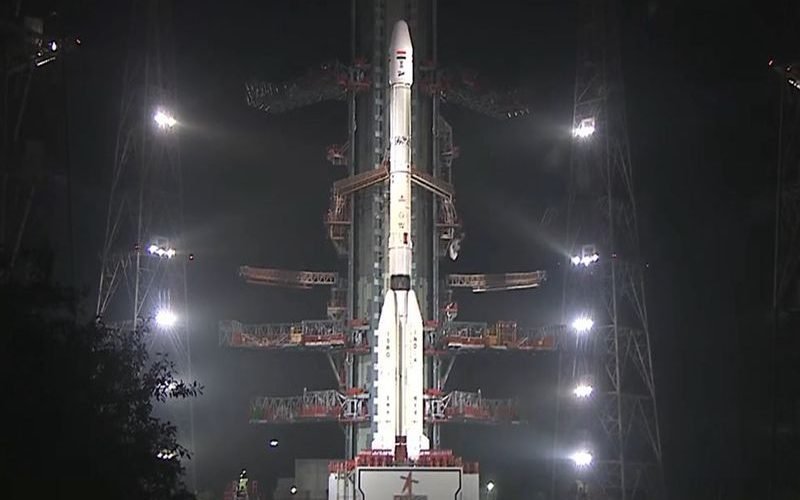
The satellite was launched aboard the GSLV-F18 rocket from the Satish Dhawan Space Centre in Sriharikota at 11:51 pm on Friday. Around 18 minutes after liftoff, the launch vehicle released NVS-03 into its designated Geosynchronous Transfer Orbit (GTO).
NVS-03 belongs to ISRO’s second-generation navigation satellite programme. Its addition is expected to improve India’s ability to provide positioning, navigation and timing services without relying entirely on systems operated by other countries.
What Is NavIC and How Does NVS-03 Strengthen It?
NavIC, or Navigation with Indian Constellation, is India’s regional satellite navigation system. It provides positioning and timing services throughout the country and in areas extending around 1,500 km beyond its borders.
The system serves as India’s indigenous alternative to global navigation networks such as GPS. It is designed to support everyday civilian requirements as well as applications linked to national security and strategic operations.
ISRO Chairman V Narayanan said three satellites, including NVS-01, were operational before the latest mission. The successful deployment of NVS-03 has now restored the constellation to its minimum operational configuration of four satellites.
NavIC-based services are used for applications such as tracking trains, road vehicles and ships in real time. The network also supports other positioning and timing requirements.
GSLV-F18 Places NVS-03 Into Transfer Orbit
The 50-metre GSLV rocket took off from Sriharikota’s second launch pad following a 24-hour countdown. ISRO reported that all three stages of the vehicle, including the cryogenic upper stage, performed as planned.
After completing its flight sequence, the rocket deployed NVS-03 into the required transfer orbit. The satellite will now use its onboard propulsion system to move towards its intended geosynchronous orbital position at 32.5 degrees east longitude.
Weighing 2,232 kg, NVS-03 has been placed in an orbit with a perigee of 170 km and an apogee of 37,023 km. These measurements indicate its closest and farthest distances from Earth during the transfer phase.
Narayanan also pointed to the pace of the mission, noting that ISRO completed the launch just 56 days after the preceding GSLV mission.
Why Is the Indigenous Rubidium Atomic Clock Important?
One of the key technologies aboard NVS-03 is an indigenously developed Rubidium atomic clock. Such clocks are crucial to satellite navigation because positioning calculations depend on extremely accurate time measurements.
Navigation systems determine a receiver’s location by analysing signals transmitted by satellites. Precise timing is therefore essential to maintaining the reliability of these calculations.
NVS-03 is equipped to transmit signals across three frequency bands: L1, L5 and S. These will contribute to the navigation services offered through India’s regional satellite network.
ISRO has also introduced a precautionary measure involving the satellite’s propulsion system. Its pyrotechnic valves were kept open before launch, a step intended to enhance the reliability of the propulsion system.
NavIC and India’s ‘One Nation, One Time’ Initiative
Beyond navigation, NavIC has a role in India’s efforts to establish consistent and reliable time services. ISRO chief V Narayanan described the constellation as a strategic national asset, emphasising its importance for independent positioning, navigation and timing capabilities.
He also highlighted its relevance to the government’s ‘One Nation, One Time’ initiative. The Centre has recently notified the Legal Metrology (Indian Standard Time) Rules, 2026, as part of its work on the use of Indian Standard Time.
Union Minister of State for Science and Technology Jitendra Singh congratulated ISRO on the successful mission, saying it represented another step towards strengthening India’s independent navigation infrastructure.
With NVS-03 joining the constellation, ISRO has reinforced an important part of the country’s space-based infrastructure. The satellite is expected to support transport tracking, precise timing and other civilian and strategic applications as it reaches its designated orbital position.
