

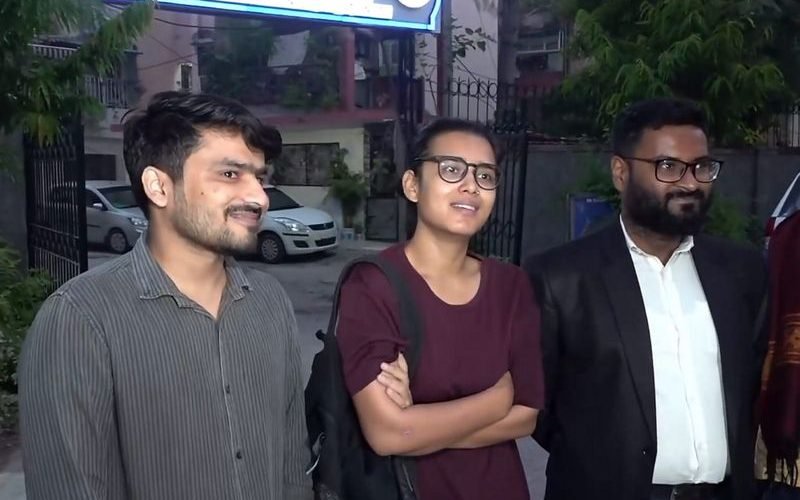
New Delhi (Gurpreet Singh): All India Students’ Association (AISA) president Neha Bora was released early Saturday morning, October 17, after spending the night in police custody in Delhi. Meanwhile, Cockroach Janata Party (CJP) founder Abhijeet Dipke remained in custody and was expected to be produced before a Special Executive Magistrate (SEM) court later in the day, Delhi Police said.
The two activists were taken into preventive custody on Friday ahead of the proposed ‘Lehra Do Tiranga’ protest march at Connaught Place. Police said Bora was released after completing the formalities related to her detention under Section 65 of the Delhi Police Act. Dipke, however, was arrested in a separate breach-of-peace case under Sections 126 and 170 of the Bharatiya Nagarik Suraksha Sanhita (BNSS).
Police sources said the SEM court would consider the proceedings against Dipke. His immediate legal status and the outcome of the court proceedings were not available at the time of reporting.
Why Were Neha Bora And Abhijeet Dipke Detained?
Bora was detained at Mandi House on Friday while travelling towards Connaught Place, while Dipke was picked up at Jhandewalan as he was on his way to the proposed march.
The demonstration was organised amid demands for Chief Election Commissioner Gyanesh Kumar’s resignation and an end to the Special Intensive Revision (SIR) of electoral rolls. Protesters and opposition groups have raised concerns over the voter-list revision process.
Delhi Police had tightened security across central Delhi ahead of the gathering. Security personnel cordoned off Central Park in Connaught Place, with Rapid Action Force personnel deployed inside and additional forces stationed in the surrounding area.
According to police, around 150 people were detained to maintain law and order and ensure smooth traffic movement.
Neha Bora Calls Detention ‘Illegal’ After Release
After her release, Bora criticised Delhi Police and the BJP-led government at the Centre, describing her detention as illegal.
Speaking to PTI Videos, the AISA president said she had been detained at Mandi House and kept at a police station until around 5 am on Saturday. She questioned the legal basis for detaining protesters overnight and alleged that the action contradicted the authorities’ stated commitment to following the law.
Bora also demanded the immediate release of all protesters who had been detained or arrested, including Dipke. She called for an end to the restrictions imposed in central Delhi and renewed her demand that the SIR process be stopped.
The AISA president further demanded the resignation or impeachment of Chief Election Commissioner Gyanesh Kumar and called for action against him. These were demands made by Bora and the protesting groups, not findings established by a court.
AISA Alleges Bora Was Moved Across Delhi
AISA alleged that after being detained, Bora was moved between different locations in Delhi for around five hours before being taken to the RK Puram police station.
The organisation also claimed that lawyers who reached the police station around midnight were not allowed to meet her. It further alleged that police officials did not clarify when she would be released and refused to provide her with medicines despite knowing that she had been unwell for several days.
These allegations were made by AISA. Delhi Police’s stated position was that the detentions were carried out to maintain law and order and prevent disruption.
Why Is Abhijeet Dipke Facing A Fresh Case?
Dipke’s case took a different course after his initial detention. Police said he was arrested under Sections 126 and 170 of the BNSS in connection with a fresh breach-of-peace case and would be produced before the SEM court.
Earlier, when Dipke was detained at the airport on October 10, a separate breach-of-peace case had been registered. He was subsequently made to sign a bond undertaking that he would not disturb the peace for one year, according to the police account provided in the report.
His latest arrest followed the preventive action taken ahead of Friday’s proposed march. The court proceedings were expected to determine the next steps in the case.
The developments have intensified the dispute over the handling of the protest, with AISA criticising the detentions and police maintaining that their actions were necessary to preserve public order. Bora has been released, while Dipke’s case remains subject to the SEM court proceedings.
