

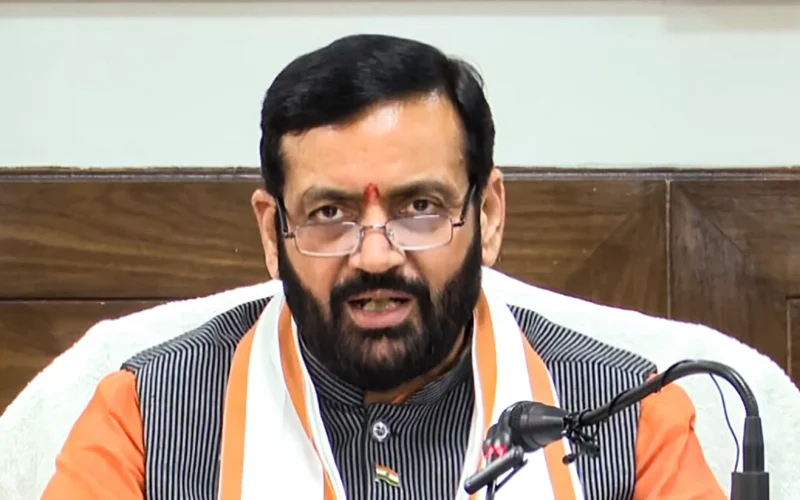
Chandigarh (Balwinder Singh)— The Haryana government continues to fortify its dairy and animal husbandry sectors through comprehensive welfare initiatives, including providing full insurance premium coverage for Scheduled Caste families and subsidising 85 per cent of premiums for general category livestock rearers. Announcing the policy milestones on Friday, Chief Minister Nayab Singh Saini affirmed that the Pandit Deen Dayal Upadhyaya Collective Livestock Insurance Scheme has emerged as a major financial safety net across rural communities. By August 31, 2026, the state had insured 19.91 lakh animals, settling 32,679 insurance claims worth ₹123.68 crore since the 2018–19 financial year to shield farmers from unforeseen economic setbacks.
The strategic push has reinforced Haryana’s position as a premier dairy producer in the country, currently ranking third nationally in per capita milk availability at 1,128 grams daily per person, trailing only Punjab and Rajasthan. Saini underscored that the provincial administration is focused on transforming traditional animal rearing into a commercially viable enterprise. Credit delivery mechanisms have expanded substantially, with banks sanctioning 2.31 lakh Pashudhan Kisan Credit Cards and distributing roughly ₹3,478 crore in working capital to farmers as of May 2026. Furthermore, under the Mukhyamantri Antyodaya Parivar Utthan Yojana, over 37,300 livestock rearers have secured targeted financial assistance to establish self-employment ventures.
Genetic enhancement and the preservation of indigenous breeds represent key priorities under the state’s agricultural modernization framework. Haryana established a dedicated Gokul Gram at the Government Livestock Farm in Hisar, alongside a newly completed sex-sorted semen laboratory built at an investment of ₹18.63 crore to accelerate high-yielding stock breeding. The government also offers cash incentives ranging from ₹5,000 to ₹20,000 to keepers of elite indigenous cow breeds such as Hariana, Sahiwal, and Belahi, while rearers of top-performing Murrah buffaloes yielding over 18 kilograms of milk daily receive incentives between ₹20,000 and ₹40,000. Regulating these efforts, Haryana remains the first state in India to enact comprehensive legislation overseeing animal breeding activities, certification, and welfare standards.
Veterinary healthcare and diagnostic infrastructure have simultaneously received major upgrades across rural districts. The administration has constructed 138 new government veterinary hospitals and set up a Biosafety Level 2 diagnostic laboratory in Hisar, with additional testing facilities underway in Panchkula and Sonipat. Large-scale bi-annual vaccination drives regularly cover nearly 55 lakh cattle against foot-and-mouth disease, alongside intensive campaigns targeting hemorrhagic septicemia and brucellosis. In parallel, registered cow shelters have received approximately ₹530 crore in state grants over the past six years, alongside extensive targeted subsidies that empower women dairy entrepreneurs and marginalised farming families across the state.
