

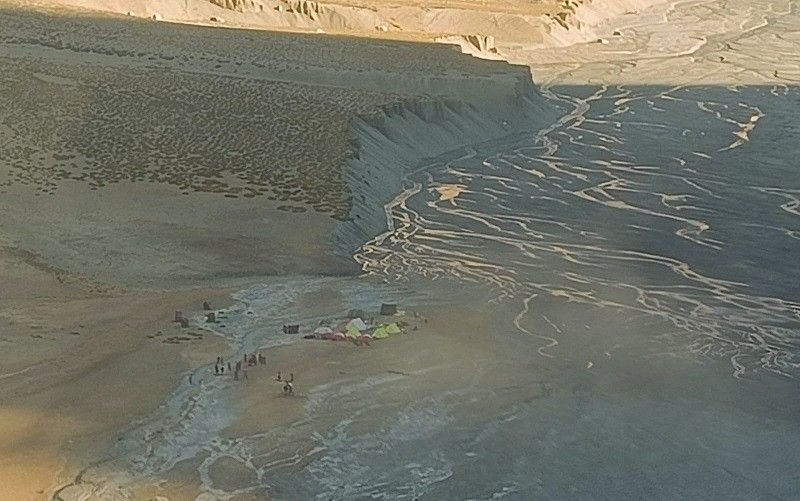
Leh (Rajeev Sharma): Four women cadets taking part in a high-altitude NCC expedition in Ladakh were evacuated by the Indian Air Force after an emergency medical request triggered a challenging helicopter rescue at around 18,500 feet.
The cadets were part of Aparajita, an all-India NCC women’s high-altitude trekking expedition. Following an SOS call, the IAF’s Siachen Pioneers helicopter unit based in Leh launched the rescue during the first hours of the day.
The operation presented significant challenges for the crew. At such elevations, thin air reduces helicopter performance, while the rugged landscape offered no prepared helipad for a conventional landing. Despite the conditions, the crew managed to carry out a controlled landing and bring all four cadets safely to Leh, where they were taken for medical attention.
A demanding Himalayan expedition
The 30-day expedition consists of three women officers and 28 girl cadets, with participants averaging about 19 years of age. The youngest member of the group is around 16-and-a-half.
Defence Minister Rajnath Singh flagged off the expedition from New Delhi on August 18.
The team is expected to cover approximately 250 km through some of the most isolated parts of the Himalayas. Its route includes Kibber, Dumla, Thaltak, Bongrojen, Parang La, Dak Karzong, Norbu Sumdo, Kiangdom and Korzok.
The journey takes the participants across glaciers, snow-covered stretches, high-altitude desert terrain and river valleys.
One of the expedition’s toughest sections is the crossing of Parang La, a pass situated at approximately 18,300 feet that links Himachal Pradesh’s Spiti Valley with Ladakh’s Changthang region.
IAF’s role in high-altitude rescues
A defence spokesperson in Leh described the evacuation as a demonstration of the Air Force’s ability to respond rapidly to emergencies in difficult environments.
The IAF and Army Aviation Corps regularly conduct rescue and casualty-evacuation missions in mountainous areas, assisting both military personnel and civilians.
Ladakh’s extreme altitude and unpredictable weather can create serious risks. Personnel operating in the region face the effects of reduced oxygen levels, while civilians can also become stranded because of avalanches, landslides or sudden weather changes.
Siachen Pioneers built for extreme conditions
The rescue was carried out by the 114 Helicopter Unit, popularly known as the Siachen Pioneers. The unit operates Cheetah light helicopters and is tasked with supporting operations in and around the Siachen Glacier.
Established at Leh in April 1964, the unit has supported Indian Army positions in the Siachen sector since the launch of Operation Meghdoot in April 1984. The operation led to India’s occupation of the Siachen Glacier and remains the world’s longest-running military operation.
Despite the age of its helicopters, the unit continues to operate in some of the most demanding flying conditions in the world. Its aircraft routinely work from rough and snow-covered locations at altitudes reaching around 20,000 feet.
Its responsibilities include supplying remote military posts, casualty evacuation, search-and-rescue missions and air maintenance.
The latest evacuation once again highlighted the importance of these capabilities in Ladakh, where altitude, terrain and weather can turn a medical emergency into a race against time.
