

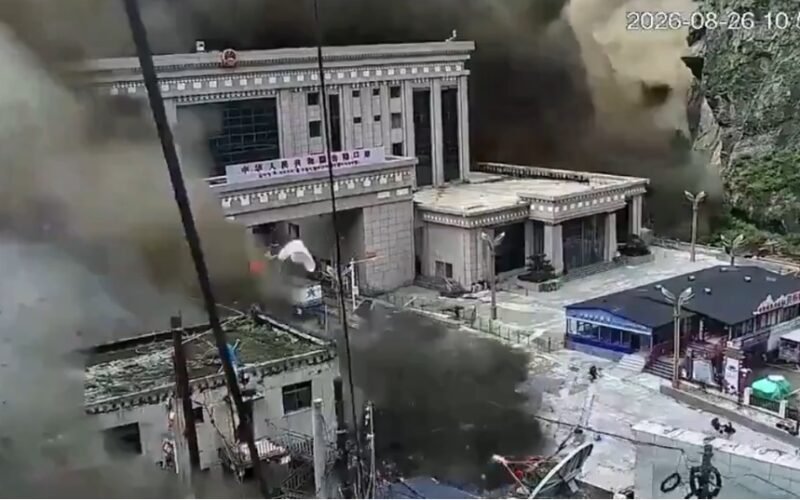
Kathmandu (Rajeev Sharma): Terrifying CCTV footage from the China-Nepal border has brought the scale of a catastrophic flash flood into sharp focus, showing floodwaters surging through the Gyirong Port area of Tibet, directly across from Nepal’s Rasuwa district.
The footage emerged after a massive flash flood struck the border region on Wednesday, leaving at least 160 people dead and hundreds of others missing, according to preliminary reports. Tourists, workers and local residents are among those feared to have been caught in the disaster.
The flooding first hit the Tibetan side before causing extensive destruction after water surged into Nepal. The force of the torrent swept through settlements and damaged critical infrastructure, bringing movement across parts of the region to a standstill.
CCTV Shows Sudden Surge of Floodwater
The CCTV visuals from Gyirong Port show an overwhelming rush of water moving through the border area, underlining the speed and intensity of the disaster.
The flood struck with little warning, leaving people in affected areas with limited time to move to safety. Rescue teams are now working in difficult mountainous terrain to locate those still missing.
Communication and transportation have also been disrupted, making it harder for authorities to establish the exact number of people affected.
19 Bridges and 40 Km of Roads Damaged
Nepal has suffered extensive infrastructure losses in the disaster.
Initial assessments indicate that around 19 bridges and 40 kilometres of roads have been washed away or rendered unusable. At least 13 hydropower projects have also sustained damage.
More than 200 trucks were reportedly swept away by the floodwaters, highlighting the enormous force of the deluge.
The destruction of roads and bridges has complicated access to affected communities and is expected to slow the movement of rescue personnel and relief material.
Hundreds Still Missing
Although the confirmed death toll has risen sharply, authorities are yet to establish the final number of missing people.
The affected region was being used by tourists, workers and travellers heading towards Tibet, raising concerns about foreign nationals who may have been caught in the disaster.
Officials are continuing to collect information from local communities, transport operators and border authorities as search operations expand.
Glacier Avalanche May Have Triggered Disaster
Experts cited in reports believe an avalanche involving glacier material may have caused the sudden release of water.
The incident has also renewed concerns over the growing risks faced by communities in the warming Himalayan region. Changes in glaciers and snow and ice conditions can increase the possibility of sudden and destructive water releases.
Authorities are continuing to investigate the exact circumstances behind the flood.
India, China Extend Support
The unprecedented destruction has prompted offers of assistance from both India and China.
Nepal’s government has appealed to non-governmental organisations and other groups to join rescue and relief operations. Authorities are focusing on reaching stranded people, providing emergency assistance and assessing damage to essential infrastructure.
India is also coordinating efforts concerning its nationals who may have been affected, while Chinese authorities are conducting rescue operations on the Tibetan side.
Rescue Efforts Face Tough Himalayan Terrain
The scale of destruction, combined with the region’s difficult geography, is posing a major challenge to emergency teams.
With roads destroyed and several areas difficult to access, authorities are relying on available rescue resources to reach isolated locations.
As search operations continue, officials are expected to revise the casualty and missing-person figures once teams are able to reach more affected areas. The CCTV footage from Gyirong Port has meanwhile provided a stark visual record of the sudden and devastating nature of the flood.
