

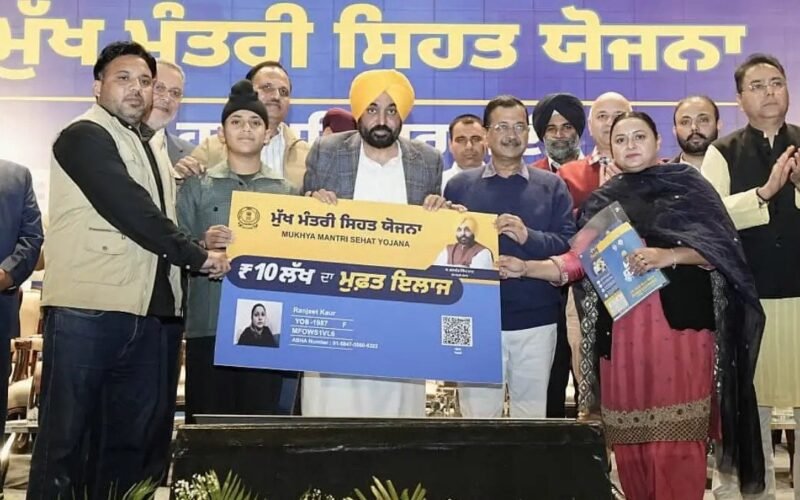
Chandigarh (Gurpreet Singh): Data from the State Health Agency (SHA), Punjab, shows that 57% of Medical Termination of Pregnancy (MTP) cases under the Mukh Mantri Sehat Yojana (MMSY) were conducted within the first eight weeks of gestation. Of 323 cashless procedures worth ₹14.86 lakh recorded so far, 185 occurred in early pregnancy, indicating a shift towards timely, safer reproductive healthcare access at more than 800 empanelled hospitals.
Abortion decisions are influenced by a range of personal, medical, and socio-economic factors. Under the Mukh Mantri Sehat Yojna, Medical Termination of Pregnancy (MTP) procedures conducted within the first eight weeks of gestation accounted for more than half of all cases, making it the most commonly utilised category under the scheme.
The findings come amid the Bhagwant Mann Government’s expansion of cashless coverage for MTP services under Mukh Mantri Sehat Yojana. Beneficiaries can now access services at both government hospitals and empanelled private healthcare facilities, significantly widening the network of providers across the state.
The data suggests that most beneficiaries are accessing abortion services in the earlier stages of pregnancy, when medical procedures are generally less complex and associated with lower clinical risk.
Under Mukh Mantri Sehat Yojana, MTP services are available cashless at more than 800 government and empanelled private hospitals across Punjab. The scheme aims to reduce out-of-pocket expenditure and improve access to timely reproductive healthcare.
Health and Family Welfare Minister Dr Balbir Singh said that the recent expansion of empanelled facilities is intended to improve access and reduce delays in care. “Cashless services at government and empanelled private hospitals are meant to ensure timely access and reduce complications associated with delayed intervention,” he said.
Medical experts note that early access to supervised abortion care is an important factor in reducing health risks. Dr Ramita Aggarwal, Senior Consultant Obstetrician and Gynaecologist at Mata Kaushalya Hospital, said that medically supervised termination within recommended gestational limits is safe and effective.
She added that delays in seeking care are often linked to financial constraints, lack of awareness, and social barriers, which can sometimes lead to unsafe practices or self-medication. “Every case requires proper clinical assessment before medication or procedure to ensure safety,” she said.
Dr Ramita Aggarwal shared some of the common reasons women seek abortion:
Contraceptive failure: Birth control methods, such as condoms or IUDs, not working as intended.
Unplanned or unintended pregnancy: Pregnancy occurring when women or couples are not prepared to have a child.
Financial constraints: Concerns about childbirth and child-rearing.
Maternal health concerns: Risks to the mother’s physical health if the pregnancy continues.
Fetal abnormalities: Detection of serious congenital or medical conditions in the fetus.
Personal, educational, or career factors: Pregnancy affecting further studies, work, or life plans.
The expansion of Mukh Mantri Sehat Yojana, she added, reflects the growing role of cashless healthcare in strengthening reproductive health services by removing financial barriers and improving institutional access.
