

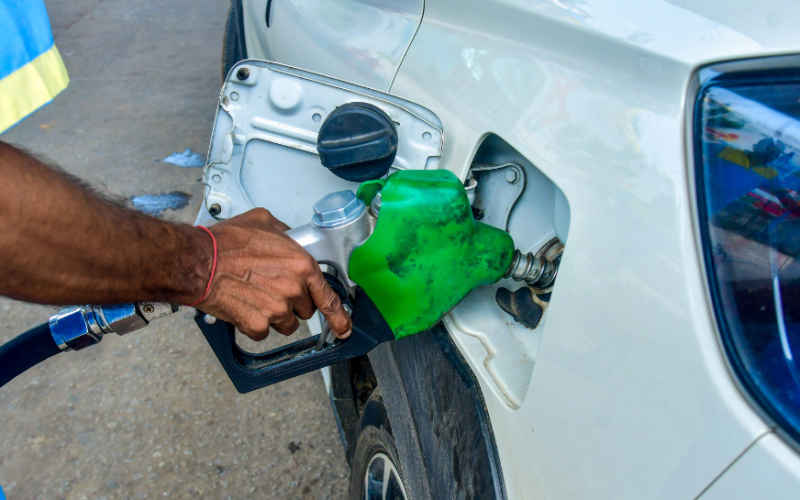
New Delhi (Gurpreet Singh): Retail automotive fuel prices across India experienced another sharp upward revision on Saturday morning, marking the third increase in less than ten days. State-owned oil marketing companies continued transferring elevated global energy costs to consumers in a calibrated manner. In the latest round of adjustments, petrol prices rose by 87 paise per litre, while diesel rates were pushed up by 91 paise per litre, collectively expanding the inflationary pressure on transport, agriculture, and logistical services nationwide.
The state-capital price revisions reflect a highly volatile fortnight for the domestic energy market. In Delhi, the latest spike has driven petrol prices from Rs 98.64 to Rs 99.51 per litre, placing the commodity on the absolute verge of the hundred-rupee milestone. Concurrently, diesel rates in the national capital climbed from Rs 91.58 to Rs 92.49 per litre. Because of variation in provincial taxation and local levies, the financial impact varied across major metropolitan hubs, with petrol climbing to Rs 110.64 per litre in Kolkata, Rs 108.49 in Mumbai, and Rs 105.31 in Chennai.
This sequence of price hikes represents a structural break from long-standing retail price stability, triggered directly by the intensifying military conflict in West Asia. The initial price revision took place on May 15 with a sharp three-rupee increase per litre, breaking a multi-year pricing freeze. This was quickly followed by a 90-paise upward adjustment on May 19. Cumulatively, the three back-to-back interventions since mid-May have elevated domestic pump prices by nearly five rupees per litre, serving as a direct reflection of volatile Brent crude futures hovering consistently above the one hundred dollar per barrel mark.
Sector analysts and industry executives indicate that minor, staggered increases are highly likely to persist over the coming weeks. Despite international crude experiencing marginal downward corrections from its peak, domestic oil marketing companies continue to operate under substantial under-recoveries and daily revenue losses. This pricing pressure matches a phase of accelerating seasonal demand, driven by robust agricultural requirements ahead of the regional wheat harvesting and paddy sowing cycles, further adding momentum to domestic consumption indexes.
