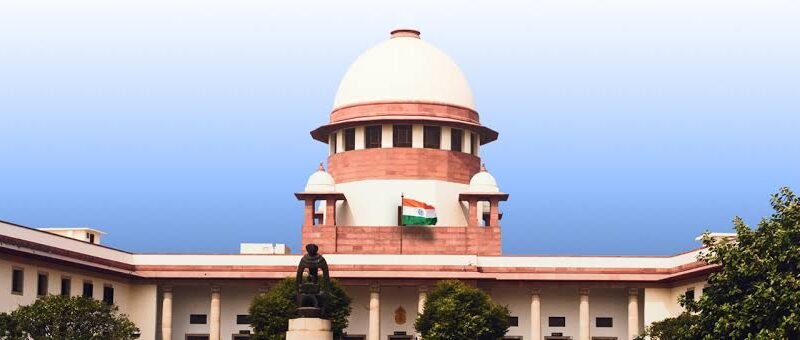
New Delhi (Gurpreet Singh)— The Supreme Court of India on Monday refused to entertain a petition challenging the deletion of names from electoral rolls in West Bengal ahead of the upcoming Assembly elections, terming the plea “premature” while underscoring the importance of the right to vote in a democracy.
A bench led by Chief Justice of India Surya Kant and Justice Joymalya Bagchi directed the petitioners to approach appellate tribunals set up to handle such disputes. The petition, filed by Quaraisha Yeasmin and 12 others, alleged wrongful deletion of their names during the Special Intensive Revision (SIR) of electoral rolls.
With Assembly elections scheduled in two phases on April 23 and 29, and counting on May 4, the court made it clear that it would not intervene in the electoral process at this stage. It also ordered that security provided to judicial officers engaged in the SIR exercise must remain intact until the elections conclude, unless modified with prior court approval.
During the hearing, the bench raised concerns about the scale of pending appeals, noting that nearly 30 to 34 lakh cases are awaiting disposal across 19 tribunals. Each tribunal is reportedly handling over one lakh appeals, placing significant pressure on the system.
Justice Bagchi emphasised the need for a “robust appellate mechanism” to ensure fairness, particularly in cases where voters may have been excluded due to procedural or technical reasons. He also flagged deviations in the SIR process, including the introduction of a ‘Logical Discrepancy’ category, which was not part of earlier practices in states like Bihar.
Highlighting the democratic significance of voting, the court observed that the right to vote is not only constitutional but also deeply “sentimental,” reflecting a citizen’s participation in governance. However, it clarified that denial of voting rights alone may not be sufficient to cancel an election unless it impacts a substantial portion of the electorate under provisions of the Representation of the People Act.
The bench also cautioned against overburdening tribunals with strict timelines, noting that judicial officers handling thousands of documents daily cannot be expected to maintain perfect accuracy. Errors, it said, are inevitable and must be corrected through due process.
Reaffirming its stance, the court stressed that safeguarding procedural fairness remains crucial, adding that voters should not be caught between administrative lapses and institutional limitations.
Supreme Court Declines Plea on Voter List Deletions Ahead of Bengal Polls, Calls It ‘Premature’
 0 Comments