

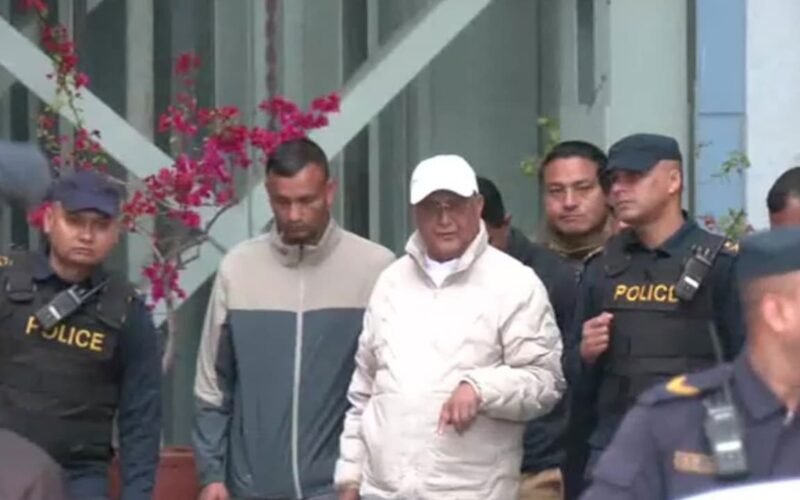
Kathmandu (Bureau): The political landscape in Nepal has been thrust into turmoil following the arrest of former Prime Minister K.P. Sharma Oli and former Home Minister Ramesh Lekhak on Saturday, March 28, 2026. The newly formed government, led by Prime Minister Balendra “Balen” Shah, ordered the arrests in connection with the deadly crackdown on the “Gen Z” protests of September 8 and 9, 2025. The movement, which resulted in 76 deaths—including nearly two dozen youths—has become a flashpoint for the new administration’s pledge to implement high-level probe commission reports on human rights violations.
The Communist Party of Nepal (Unified Marxist-Leninist), or CPN-UML, immediately condemned the move as “political revenge” and “prejudicial.” Following an emergency Central Secretariat meeting, UML Secretary Mahesh Basnet announced a nationwide “political and legal battle” against the government. Protests erupted in the Chabahil area of Kathmandu on Saturday afternoon, with the party directing all 77 district headquarters to hold demonstrations at 3:00 PM and submit formal protest letters to Chief District Officers by Sunday. The party maintains that Chairman Oli is being targeted vindictively rather than through due legal process.
Criticism has also emerged from other political quarters, reflecting concerns over the stability of the young Balen government. Senior Nepali Congress leader Arjun Narsingha KC and former Science Minister Ganesh Shah both cautioned that while implementing probe reports is essential, the government appeared to have acted “in a hurry” without following transparent procedures. Kamal Thapa of the RPP-N further warned that the administration seems to be choosing a path of “conflict and confrontation” over reconciliation. Despite the backlash, the Shah Cabinet remains firm, asserting that accountability for the 2025 killings is a primary condition for the “good governance” it promised upon taking office on Friday.
