

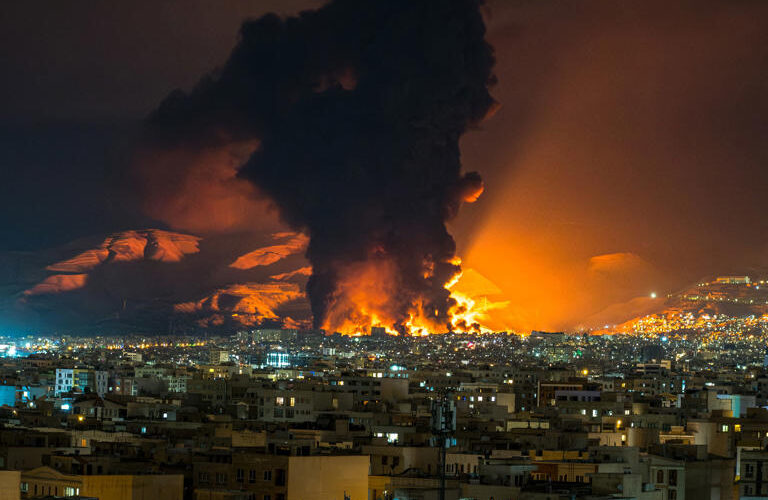
Calgary ( Rajeev Sharma): A striking historical coincidence has captured global attention in 2026: the calendar of this year is identical to that of 1914 the year the world plunged into the catastrophic conflict known as World War I. Both 1914 and 2026 begin on a Thursday and are non-leap years with 365 days, meaning every date in 2026 falls on the exact same weekday as it did in 1914.
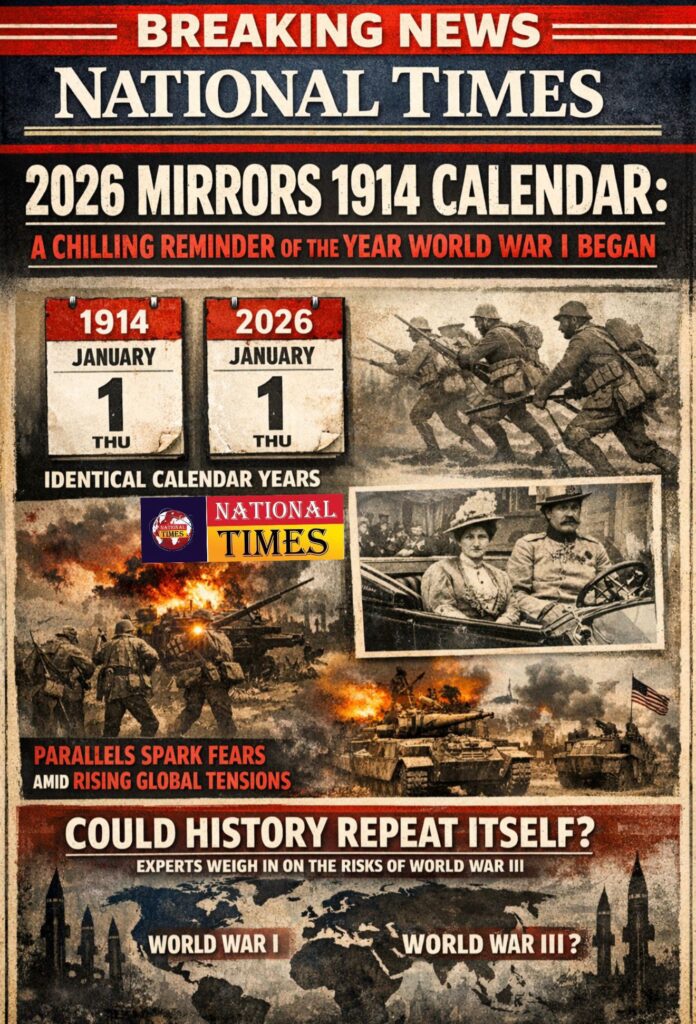
The year 1914 marked one of the most dramatic turning points in modern history. On June 28, 1914, Archduke Franz Ferdinand was assassinated in Sarajevo by Gavrilo Princip. The assassination sparked a diplomatic crisis that quickly escalated into war when Austria‑Hungary declared war on Serbia on July 28, 1914. Within weeks, major powers including Germany, Russia, France, and United Kingdom were drawn into the conflict, eventually creating a global war that lasted until 1918 and claimed more than 16 million lives.
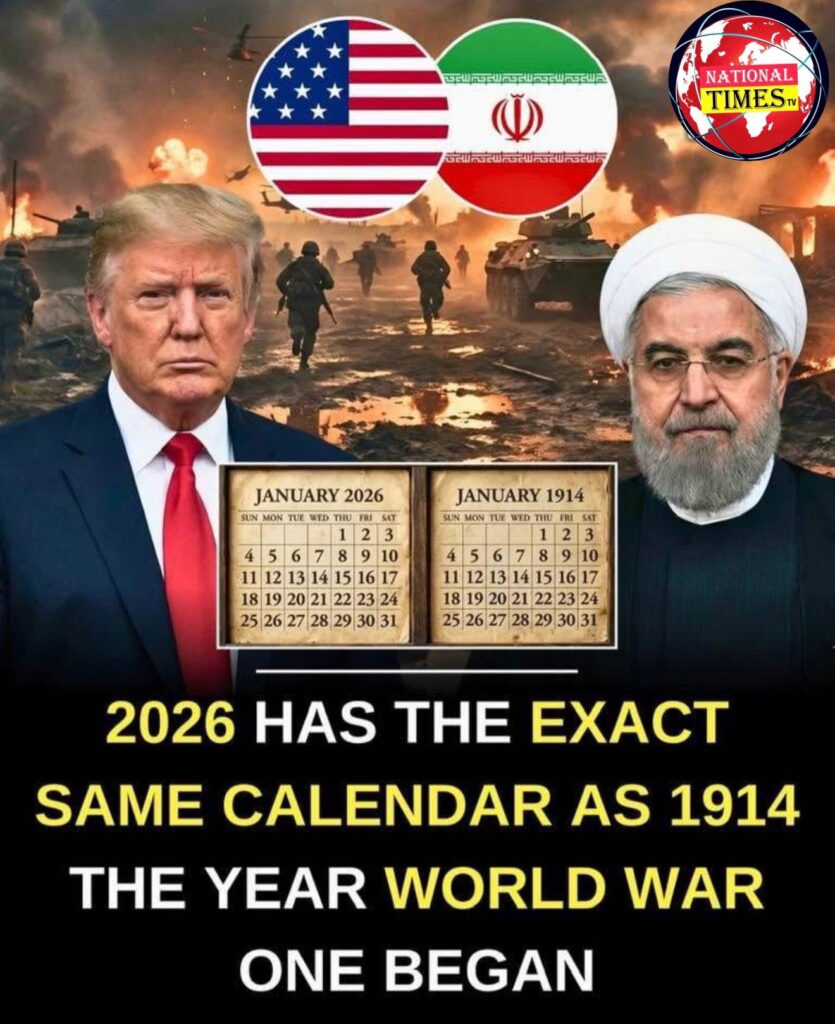
The calendar coincidence between 1914 and 2026 has sparked widespread discussion online, particularly as the world currently faces several geopolitical tensions. Ongoing conflicts such as the war between Russia and Ukraine linked to the Russian invasion of Ukraine, escalating tensions in the Middle East involving Israel and Iran, and strategic rivalry between the United States and China have led some analysts and commentators to warn about the risk of a larger global confrontation. However, most global security experts emphasize that while tensions exist, the likelihood of a full-scale World War III remains low due to strong diplomatic frameworks, economic interdependence, and the deterrence created by nuclear weapons. International institutions such as the United Nations continue to play a crucial role in mediating disputes and preventing escalation between major powers.
Historians say the identical calendars are simply the result of the mathematical cycle of the Gregorian calendar. Still, the symbolic connection between 2026 and 1914 serves as a reminder of how quickly geopolitical tensions can spiral into global conflict. Many observers believe the coincidence should encourage world leaders and citizens alike to reflect on the lessons of history and reinforce efforts toward diplomacy, cooperation, and peace in an increasingly complex global landscape.
