

Rajeev Sharma :- Tensions between Israel and Iran escalated sharply after what both sides described as precision military strikes targeted several Iranian cities, including the capital, Tehran. The developments mark one of the most intense phases of the ongoing confrontation, with conflicting claims emerging about high-level casualties and strategic impact.
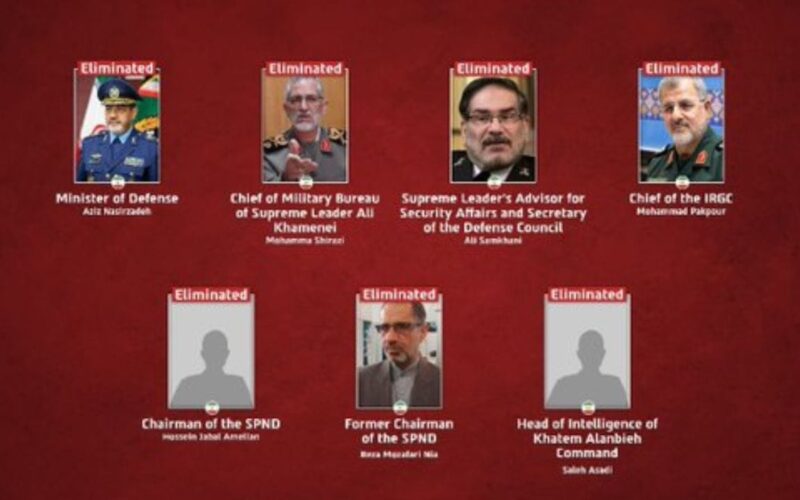
According to Israeli military statements, its forces conducted highly targeted operations against Iranian defence infrastructure. Israeli officials assert that these strikes completely neutralised key military sites and resulted in the deaths of seven senior Iranian defence figures. Among those named by military sources were former defence minister Aziz Nasirzadeh, elite commander Mohammad Pakpour, top adviser Ali Shamkhani, military strategist Mohammad Shirazi, intelligence mastermind Saleh Asadi, SPND head Hussein Jabal Amelian, and former SPND chief Reza Mozafari-Nia.
In a public statement, the Israeli armed forces described the operation as a “precise and effective blow” to Iran’s military leadership, asserting that the manoeuvre significantly degraded Tehran’s capacity to wage further offensive actions. The statement, widely shared across official and social media channels, underscored the breadth of the military action.
Unofficial media reports from Israeli outlets such as WINE.NET, citing CBS and defence sources, went further, suggesting that as many as 40 senior Iranian operatives may have been killed in the coordinated assaults carried out in collaboration with United States military assets. These figures have not been independently verified by neutral observers.
Adding to the shockwaves, some Iranian media outlets have now echoed claims that Supreme Leader Ali Khamenei has died as a result of the strikes. While Tehran has yet to issue an official confirmation or provide independent verification, the possibility of a leadership vacuum has stirred regional and international concern. Attention is now focused on how Iran’s political and military hierarchies might respond and who could succeed in the event of a confirmed leadership change.
The exchange of threats and strategic messaging suggests both nations are attempting to project strength, even as international actors push for de-escalation and a diplomatic resolution. With uncertainty rising, the region faces heightened instability, and global observers remain alert to any signs of further escalation or moves toward negotiation.
