

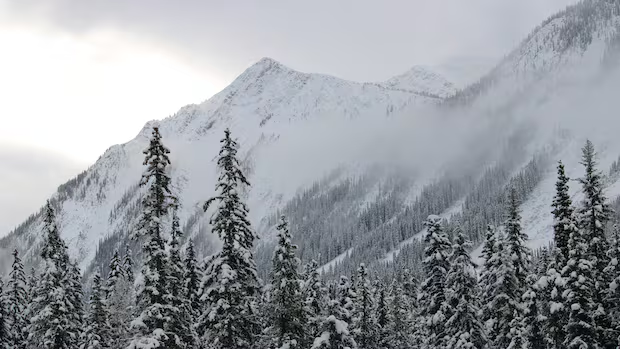
British Columbia (Rajeev Sharma): British Columbia’s snow pack is off to a strong start this year, with levels slightly above the seasonal average, according to the province’s latest snow survey and water supply bulletin. Issued on January 9, the report indicates that the provincial snow pack stands at 107 per cent of normal levels for this time of year, compared with 87 per cent on January 1, 2025.
Regional variations are significant. While the South Coast basin and Vancouver Island are below average—at 67 per cent and 58 per cent, respectively—the Central Coast, Similkameen, and Nechako regions are well above normal, registering 160 per cent, 146 per cent, and 143 per cent of their typical snow levels. Last year, the Similkameen region spent more time under Drought Level 4 conditions than any other area in the province.
The report credits early snowfall in October, continued accumulation through November, and a series of December storms—including atmospheric river events—for the strong provincial totals. Moderate storms in early January have also contributed to the snow pack.
Forecasters note that La Niña conditions, currently in effect across the Pacific, often bring above-average snowfall to British Columbia. Temperature predictions for January through March suggest above-normal conditions for Vancouver Island and the southernmost regions, while the northeast and Peace regions may see below-average temperatures.
By early January, roughly half of the province’s expected annual mountain snow pack has already accumulated. Officials warn, however, that snow levels can still fluctuate as winter continues. The BC River Forecast Centre will maintain close monitoring and provide updates on snow pack conditions throughout the season.
This stronger-than-normal snow pack offers a positive outlook for water supply and hydroelectric generation, but provincial authorities continue to advise vigilance given regional disparities and ongoing storm activity.
