

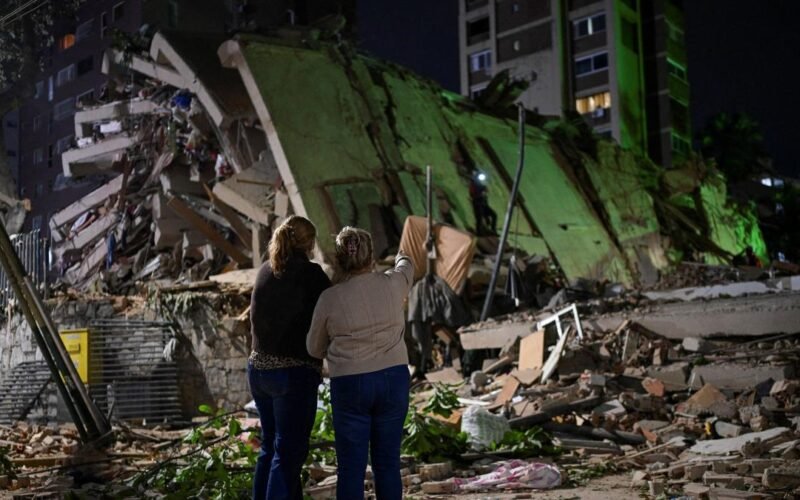
Venezuela (Rajeev Sharma): Rescue operations in Venezuela suffered another setback on Saturday after a fresh earthquake struck the country’s northern region, adding to the challenges faced by emergency teams working in the aftermath of this week’s devastating twin earthquakes that have claimed at least 1,430 lives.
The latest tremor, measuring 4.8 in magnitude, was recorded near Aragua state at around 3 p.m. local time, according to the European-Mediterranean Seismological Centre. Although there were no immediate reports of additional casualties from the latest quake, it triggered renewed panic among residents and forced rescue workers to reassess conditions at several damaged sites.
The fresh seismic activity follows the powerful 7.2 and 7.5 magnitude earthquakes that struck Venezuela within minutes of each other on Wednesday evening. Those back-to-back tremors caused widespread destruction across multiple states, flattening buildings, damaging roads and leaving thousands without shelter.
Authorities have confirmed that the death toll has risen to 1,430, making it one of the deadliest natural disasters in the country’s recent history. Officials fear the number could increase further as search teams continue to recover bodies from collapsed buildings and remote areas that remain difficult to access.
Efforts to locate survivors have been slowed by repeated aftershocks, which continue to threaten unstable structures. Rescue personnel have had to temporarily halt operations at several locations whenever fresh tremors were felt, delaying the removal of debris and reducing the chances of finding survivors.
The shortage of heavy rescue equipment has added to the difficulties. Emergency responders are relying on a combination of specialised teams, volunteers and manual excavation in areas where machinery has either not arrived or cannot safely operate.
Thousands of residents have spent successive nights in temporary shelters or open spaces, unwilling to return to homes that may have suffered structural damage. Relief agencies are distributing food, drinking water, medicines and emergency supplies as displaced families await further assistance.
Seismologists have indicated that aftershocks are a normal consequence of major earthquakes and could continue for several days. Authorities have therefore advised people to stay away from damaged buildings and remain prepared for additional seismic activity.
Meanwhile, engineers have begun assessing the structural stability of hospitals, schools, public buildings and residential complexes in the affected regions. The inspections will help determine which structures can be repaired and which may require demolition due to safety concerns.
As Venezuela continues to grapple with the scale of the disaster, the focus remains on saving lives, restoring essential services and providing humanitarian relief to communities devastated by one of the country’s most destructive earthquake sequences in decades.
