

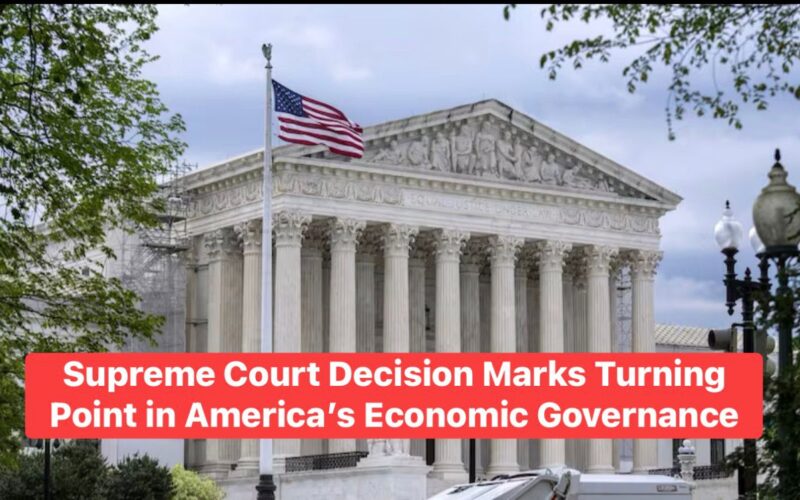
Washington (Bureau): In a landmark development, the U.S. Supreme Court has reinforced that the constitutional authority to impose taxes and broad tariffs lies with the U.S. Congress, not with the president acting unilaterally under emergency powers. The ruling, delivered by a 6–3 majority, underlined that while the president can act in limited trade matters under specific statutes, sweeping “global tariffs” cannot be justified solely on the basis of national emergency declarations. The decision is seen as a setback to the protectionist trade approach long advocated by President Donald Trump, whose economic agenda relied heavily on tariffs as a tool to pressure foreign governments and protect domestic industries.
The reaction was immediate and sharply divided. Opposition lawmakers welcomed the verdict, calling it a victory for constitutional balance and warning that unchecked tariff powers could hurt consumers and fuel inflation. Trade and business groups said the decision would bring greater predictability to global markets, noting that abrupt tariff hikes disrupt supply chains and raise costs for manufacturers and retailers. Financial markets responded cautiously, with analysts saying the ruling may reduce future trade-war risks but could also complicate any administration’s ability to respond quickly to economic threats.
From Trump’s camp, the response was critical, with allies accusing the court of weakening executive authority in times of crisis and arguing that tariffs remain a necessary weapon to counter unfair trade practices, especially by China. Internationally, diplomats and trade partners viewed the ruling as a stabilizing signal, suggesting it could lower the chances of sudden, unilateral U.S. tariff actions and ease long-running trade tensions.
Experts say the judgment could have long-term consequences for U.S. trade policy, ensuring that any major tariff regime must pass through Congress rather than being imposed by presidential decree. The ruling has added a new dimension to global trade uncertainty, as governments and investors now watch closely how future U.S. leaders navigate economic policy within tighter constitutional limits.
