

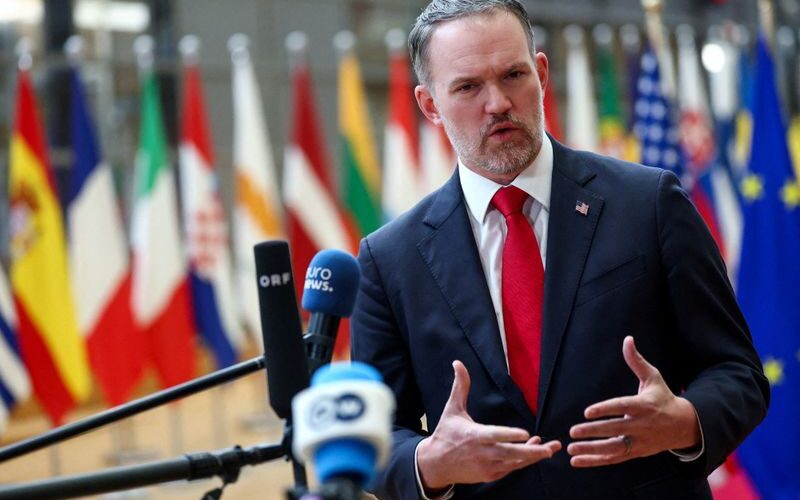
Washington, D.C. (Rajeev Sharma)— The Office of the United States Trade Representative (USTR) announced the initiation of a massive investigation into the trade practices of 16 major global partners. The probe, launched under Section 301 of the Trade Act of 1974, targets economies accused of maintaining “structural excess capacity” in their manufacturing sectors, a move that signals a significant escalation in the Trump administration’s efforts to reshape global supply chains and protect American industry.
The investigation covers a broad spectrum of economies, including China, India, Japan, the European Union, South Korea, and Mexico. Other nations under scrutiny include Singapore, Switzerland, Norway, Indonesia, Malaysia, Cambodia, Thailand, Vietnam, Taiwan, and Bangladesh. According to USTR Jamieson Greer, the primary objective is to determine whether the manufacturing policies of these nations are unreasonable or discriminatory and if they place an undue burden on U.S. commerce by exporting overproduction that cannot be consumed domestically.
Focus on Overcapacity and Unfair Subsidies
The USTR has highlighted specific concerns regarding sectors where foreign production capacity appears untethered from actual market demand. In the case of India, the American trade office pointed to the solar module sector, alleging that India’s manufacturing capacity is nearly triple its domestic demand. Other Indian sectors under the microscope include steel, petrochemicals, textiles, health, and automotive goods. Similar accusations have been levelled against China regarding its electric vehicle and steel production, and against Germany for underutilised chemical facilities.
Jamieson Greer stated that the United States would no longer “sacrifice its industrial base” to countries that export their problems of excess capacity. The administration argues that this overproduction displaces American domestic production and prevents necessary investments in U.S. manufacturing. The probe will examine a variety of indicators, such as large persistent trade surpluses, government subsidies, suppressed domestic wages, and non-commercial activities of state-owned enterprises.
A Strategic Response to Judicial Setbacks
This aggressive trade action follows a February 20 decision by the U.S. Supreme Court that struck down the administration’s previous “reciprocal” tariff programme under the International Emergency Economic Powers Act (IEEPA). By pivotting to Section 301, the administration is utilizing a legal tool that has historically proved more resilient to court challenges. While a temporary 10% global tariff is currently in place under Section 122, the Section 301 investigation is widely viewed as a mechanism to reimpose more targeted and permanent tariffs by this summer.
The announcement has already sparked concern among trade bodies in India. Pankaj Chadha, Chairman of the Engineering Exports Promotion Council (EEPC) India, remarked that the development adds fresh uncertainty to an engineering sector already grappling with significant duties on steel and aluminium. He suggested that the investigation might be intended to provide the U.S. with additional leverage in ongoing trade negotiations that have yet to be formally signed.
The USTR has set a fast-tracked timeline for the investigation, with public comments being accepted until April 15 and a formal hearing scheduled for May 5, 2026. The administration aims to conclude the proceedings and propose remedies before the current temporary tariffs expire in July. Beyond the manufacturing probe, the USTR also initiated a separate Section 301 investigation into forced labour practices, which is expected to cover more than 60 countries.
