

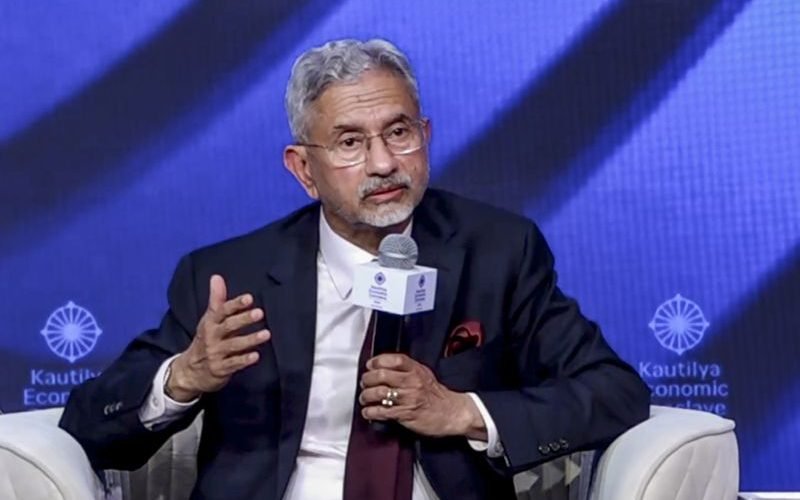
New Delhi (Gurpreet Singh): External Affairs Minister S. Jaishankar delivered a pointed assessment of global multilateralism on Monday, stating that the United Nations has become gridlocked and largely irrelevant to resolving major international crises, ranging from the conflicts in Ukraine and the Gulf to challenges across Africa and the COVID-19 pandemic. Speaking at the concluding session of the 5th Kautilya Economic Conclave in New Delhi, Jaishankar called for urgent and comprehensive structural reforms. He emphasized that the persistent inability of the UN Security Council to act decisively has fueled a widespread perception that the body no longer reflects or serves the interests of the broader international community.
Drawing a corporate parallel, the External Affairs Minister pointed out that the United Nations was established with 51 founding members and has since expanded nearly fourfold. He argued that retaining the original governance structure while the broader membership has multiplied is completely unworkable, observing that an organization that has grown four times over cannot continue functioning effectively with its original board of management.
Jaishankar firmly rejected arguments by status-quo nations that resist Security Council expansion under the pretext of defending African interests. He noted that African nations have already clearly articulated their positions and aspirations within the intergovernmental negotiations process, rendering such paternalistic justifications baseless. At the same time, he clarified that India’s objective is not to bypass or dismantle the multilateral body, stressing that the international community still needs the United Nations and that the collective task must be to fix the system rather than work around it.
Framing these institutional challenges within a broader assessment of the international arena, Jaishankar described the current period as an age of flux marked by shifting alignments, the emergence of new centers of influence, and a transition toward multipolarity. In such an environment, India’s foreign policy rejects zero-sum thinking, maintaining active simultaneous engagements with the United States, Russia, China, and Europe. He underscored that India will continue championing the priorities of the Global South, particularly regarding access to food, fuel, fertilizer, and finance, reiterating that institutions conceived for a mid-twentieth-century balance of power cannot remain static in a transformed world.
